The booking engine is the product, not the skin
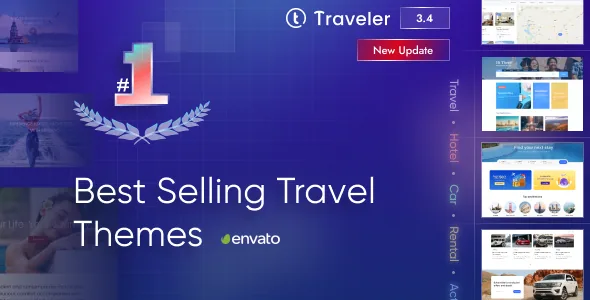
Shinetheme describes Traveler as a complete travel booking system that runs "without additional plugin required." That sentence is the one to judge the theme by: availability search, a detail page per service, a booking form, checkout and booking administration are presented as parts of the theme rather than a separate reservation plugin installed alongside it.
The inventory spans five service types. The vendor's demo list is organised by category — hotels (Motel, Homap, Lustay, Hostel, Single Hotel), tours (Modtour, Tomap, Hiking, Sintour, Yatour, CityTour, SoloTour), activities (Modactivity, Acmap), rentals (Modrent, Remap), cars (Modcar, Carmap) and two mixed-service demos. The same description calls that library "20+" in one place and "27" in another, so the count is approximate. What matters practically is overlap: several demos reuse a layout with a different palette, and the question worth answering on the public demo is whether one demo covers two of your service types or whether you need a mix.
Pricing rules that replace spreadsheet guesswork
The pricing controls decide whether you can publish the rates you actually charge, and the vendor names five. Seasonal pricing sets a different rate for a specific day across the year. Variable pricing changes the figure as the guest count on the booking bar changes. Price by person separates adult and child rates. Discounts apply by number of days booked. Extra price adds fees such as an additional guest or daily housekeeping.
Booking rules sit beside them: instant booking for direct reservations, a minimum number of days before arrival, guest checkout without an account, invisible reCAPTCHA on the checkout page, and tax and booking fee settings in the theme options.
Those last two sit at different levels, which is the detail to check before designing a multi-property site. The vendor places pricing inside the booking system per service, but describes taxes and fees as theme options — a site-wide setting rather than a separate tax profile for each property or region.
Calendar sync, refunds and the two screens you will live in
The OTA Calendar feature covers iCal syncing with Google Calendar, TripAdvisor Calendar, Airbnb Calendar and HomeAway Calendar. If your hotel or rental is also listed on Airbnb, this is what stops one night being sold twice. It is an import-and-export feed, not a channel manager: rates, listing content and availability logic stay in Traveler, and each connected platform keeps its own rules.
Refunds run as a request flow instead of an email chain. Customers ask for a refund from their dashboard, and the administrator handles requests in a dedicated interface. That dashboard also shows a customer their booking history.
On the admin side, all booking requests and their current statuses are collected in one place, sortable and displayable on a calendar. The refund queue and the booking list are the screens that will see daily use, so they are worth walking through on the demo before anything else.
Custom fields and attributes instead of per-service templates
The booking form is edited with a built-in form builder. The vendor lists text fields, drop-down lists and multiple-choice inputs, each markable as required or optional, with no stated limit on how many you add. Unlimited attributes let you describe each service — the values a guest filters on or reads before booking.
The detail page carries the fields you would expect: number of days, price, minimum age, a map and a gallery. For a car rental the useful attribute might be transmission; for a hike, difficulty and minimum age; for a hotel, room type and amenities. Doing this through the theme's own fields means those values can be displayed, searched and booked without a developer writing a template per service type.
One boundary to plan around: the vendor states that service images, sliders and banner examples are not included in the package. You supply the photography.
Where the money goes: commissions, partners and gateways
The partner layer points at marketplaces rather than single-owner sites. An administrator sets the commission taken when a partner makes a sale. Partners buy membership packages that let them list a service, manage a profile, view a booking calendar and read their booking history. A withdrawal minimum controls when payout requests can be made.
Payments are handled at checkout. The vendor names PayPal, Stripe, Razorpay, 2Checkout, PayUbiz, Authorize.net, DPO, iPay88, OnePay, OnePay ATM, PayUMoney, Payulatam, Mercado Pago and Billplz, plus offline bank transfer, and notes that the WooCommerce checkout can be used instead — which brings in whatever gateways WooCommerce supports. Read that as a compatibility statement from the vendor, not a tested matrix; verify the gateways you rely on against your merchant account.
A smaller item with commercial weight: affiliate links to TravelPayout, HotelsCombined, Booking.com and Expedia are supported, so the site can earn referral income on services it does not sell directly.
Page building, translation and what the listing records
Demos import in one click, and the vendor says the import also installs a required plugin and sets up hotel, room, tour, rental and car content. Layouts are built with Elementor or WPBakery Page Builder. The marketplace attributes, observed on 3 November 2026, list both as compatible along with WPML, a responsive layout, 4+ columns and PHP, CSS and JS files in the package.
The same listing declares WordPress support from 5.6.x through 6.8.x. Gutenberg Optimized is marked "No," which describes the theme's optimised workflow rather than disabling the block editor; the demos and the vendor's documented path sit in Elementor and WPBakery.
Translation runs through WPML compatibility — the theme is compatible with the plugin, not bundled with it, so a multilingual build needs its own WPML licence. Other integrations the vendor names are Mailchimp, Yoast SEO, RankMath and Contact Form 7, plus social profile links and social login through Facebook, Instagram and Twitter.
Questions & answers
Do I need a separate booking plugin to take reservations with Traveler?
The vendor describes a complete booking system inside the theme, claiming no additional plugin is required for availability search, booking forms, checkout and booking management. Confirm that against the documentation for the service types you sell, since other plugins your project depends on may still be needed for unrelated jobs.
Does the package include the photos used in the demos?
No. The vendor states that service images, sliders and banner examples are not included in the theme. Plan on sourcing and licensing your own photography for hotels, tours, rentals and cars.
Can Traveler sync availability with Airbnb and other OTA calendars?
The vendor lists iCal sync with Google Calendar, TripAdvisor Calendar, Airbnb Calendar and HomeAway Calendar. That keeps calendar entries aligned between platforms; it does not manage rates or listing content on those platforms.
Is WPML bundled for a multilingual travel site?
WPML is listed as a compatible plugin, not a bundled one. A translated site needs its own WPML licence, and translation work sits on top of the theme rather than inside it.