The navigation is Elementor content, not a fixed shell
In many corporate themes the header is a setting: you pick a layout from a list and adjust colours. Avante's vendor description makes a broader claim — the header, the main navigation, the mega menu and the footer are all assembled with Elementor, and the mega menu specifically is described as being filled with drag-and-drop content rather than columns of links only. If a client's navigation needs a promo block, a services grid or a contact strip inside the dropdown, that becomes a builder layout you design instead of a constraint you work around.
Underneath sits a conventional set of starting points: five menu layouts covering left-aligned, centred, left vertical, hamburger with an open side menu, and hamburger with a fullscreen menu. A sticky menu can be switched on in one step and offers light and dark colour schemes. Font, padding, letter spacing, text transform and hover/active colours for the menu, submenu and side menu are separate settings, so the navigation look does not depend entirely on the builder template. Treat the specifics as vendor-described: how deeply each layout can be reworked in the builder is stated in prose, not documented choice by choice.
Showing work while keeping control of the images
The vendor's feature list pairs two things you would normally solve with separate plugins: 20+ portfolio, video and gallery layouts, and image protection options including password protection, right-click blocking, drag protection and watermarks. For a consultancy or finance practice publishing pitch decks, event photography or case-study visuals, that combination is the practical part of the theme.
The layout side is broken into named content types — Portfolio, Slider, Gallery, Video Gallery and Page — each with pre-designed templates. Video galleries are described as displaying media directly from the site or from YouTube, and blog posts are said to accept images, gallery sliders, YouTube, Vimeo and self-hosted video. Read the protection toggles as deterrents you configure at your own discretion: the vendor lists them as options, and none of them can stop someone photographing a screen. Where they do earn their place is client review — a password-gated gallery shared with a committee before a campaign goes public.
Where page layout and site-wide styling divide
Two editing surfaces do different jobs, and knowing which one owns what saves confusion in the first week. Pages and posts are laid out in Elementor from 50+ predefined page templates, with 9 homepages and 8 blog templates as starting material; a finished page can be saved as a template and reapplied elsewhere.
Typography and colour, meanwhile, live in the WordPress Customizer with a live preview. The vendor lists over 500 Google Fonts plus Typekit and self-hosted font uploads, with granular controls: separate font family, size and weight for headings H1–H6, button fonts, menu and submenu spacing and casing, page title and tagline sizing, and widget titles. Colours are split into the same element groups — content, links, form inputs including focus state, buttons, menu, submenu, mega menu header, top bar, side menu, search input, page header, sidebar and footer.
The consequence is worth stating plainly: a brand palette change is a Customizer job that reaches every template, while anything structural about how a section is arranged is an Elementor job on that page. Backgrounds follow the same split, with image, repeat, size, attachment and position options for the menu, side menu, page header and footer.
Small site-wide switches outside both panels
A few controls sit outside the builder and the typography panels. A top bar can be switched on above the main menu with contact hours and a phone number, and social icons can be set to open in a new window. A site frame can be enabled with one click, with its colour picked from a colour wheel. Social sharing buttons can be applied across all pages from a single setting. Responsive behaviour is on by default, with a one-click switch in the Customizer to turn it off — a real option for a locked-down corporate intranet or kiosk view, though most public consulting sites will leave it alone.
Compatibility as declared, and what the attributes leave open
The marketplace attributes observed on 4 November 2026 list compatibility with Elementor and Elementor Pro, WPML, bbPress 2.5.x, Facebook, and WooCommerce versions 6.x.x through 9.x.x, with a WordPress software-version range running from 5.0.x up to 7.0.x. These are declarations stored with the listing, not results from running the theme on any particular host, so the versions you can rely on are the ones you confirm on your own stack.
One attribute needs care. Gutenberg Optimized is listed as No, which describes optimisation for the block editor rather than the block editor's availability. The theme's layout work happens in Elementor, so that is the workflow to plan for. The listed package files are PHP, CSS and JavaScript, with no mention of a bundled slider plugin — check whether the sliders shown in the demo depend on a separate plugin before you count on them. The listing also carries a sales and rating record, which speaks to adoption rather than to how the theme behaves in your build.
What the Elementor-built navigation asks of the team
Avante repays its setup time when the site is a corporate or consulting presence where the navigation is part of the design — a mega menu carrying service categories, a header that changes with a campaign, a footer built from the same modules as the pages — and where the media section needs both variety and a way to gate or mark images before they go public.
It asks more of you if the person maintaining the site is comfortable in the block editor rather than Elementor, because the header, menu and footer all route through the builder. That is the single assumption to test before committing.
Questions & answers
Can I change the header and footer without touching theme code?
The vendor describes the header, navigation menu, mega menu and footer as fully customisable with Elementor, so the layout work happens in the builder. Menu-level typography and colours are separate Customizer settings, which means some of the header's appearance is still adjusted outside Elementor.
How many homepage designs come with the theme?
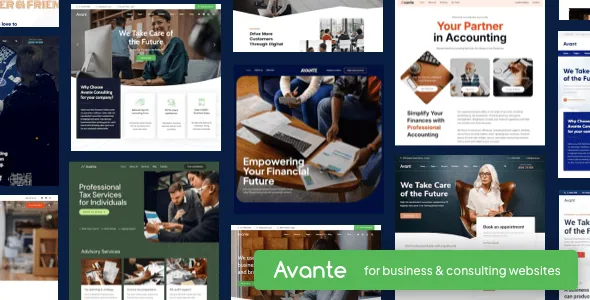
The vendor lists 9 homepages with different designs and colour schemes, plus 50+ predefined page templates and 8 blog templates available from the Elementor builder. The vendor also says it intends to add more homepages in future updates, which is a statement of intent rather than a commitment.
Does the Gutenberg Optimized setting mean the block editor is unusable?
No. It means the theme is not optimised for the block editor. Because page layouts are built in Elementor, plan the editing workflow around that rather than around blocks.