Global options and per-page metaboxes are two different layers
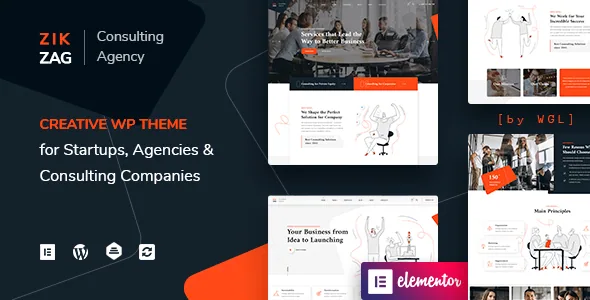
Most Elementor themes hand you one settings screen and let page content do the rest. ZikZag, as WebGeniusLab describes it, splits the job in two. A theme options panel holds more than 100 settings and covers the site as a whole, while the vendor separately lists the ability to set local options on an individual page through metaboxes.
That distinction decides how you handle one-off requests. If a single campaign landing page needs a different header arrangement or a different title area, you change it on that page rather than building a second global style that then leaks into the rest of the site. Consulting and agency sites usually grow exactly this way — one service page, then a case study, then an event page — so a per-page override layer is the feature that keeps the global design stable while the site accumulates exceptions.
The header sits in the same layer as the global options. The vendor's WGL Framework includes what it calls an Elementor header builder plus a flexible drag-and-drop header builder with presets, which means masthead changes are a builder task rather than template editing.
What the WGL modules put on a page
Elementor is the canvas, and the vendor describes more than 30 WGL modules with their own settings, plus extended row animations. A module in this sense is a content block you place: a team member grid, a portfolio grid, a product showcase, and so on.
The team module is worth naming because it is the one agency sites lean on hardest — a roster with roles and photos that you will edit every time someone joins or leaves. Portfolio modules are the second, and they carry their own display options rather than depending on a single template. A separate module is described for presenting products on ordinary pages, which is useful when a service firm wants to show a small range of products outside the shop.
Colour and font control is also part of this layer, with the vendor stating that both are customisable. The practical question to ask of any module is whether its styling comes from the theme options or from its own per-module settings; the description supports both levels existing, not which wins in a conflict.
Portfolio and blog indexes: how they paginate
The vendor gives numbers rather than a single template for published content: 15+ unique blog layouts and 10+ portfolio layouts, along with four different homepages. Counting layouts is less useful than knowing how an index behaves once it fills up, and here the description is specific.
The portfolio grid supports infinite scroll and a Load More button. Those are two different reading experiences. A Load More button gives a visitor a deliberate action and keeps the footer reachable; infinite scroll keeps the page flowing but buries the footer and makes it harder to return to a known item. For a portfolio with a fixed set of case studies, Load More usually suits a client who wants to reach the contact form; for a larger archive, infinite scroll keeps people browsing.
On the home page side, four starting layouts means you choose a structure per project rather than adapting one template four ways. The one-click demo import is described as a starting point, so expect the imported demos to be content you replace, not content you keep.
The declared compatibility, and one claim that sits outside it
The marketplace attribute record taken on 4 November 2026 lists Elementor and WooCommerce 6.x through 9.x as compatible, along with a WordPress range running from 5.7.x up to 7.0.x, five browsers, responsive layout and a four-plus column grid. Files are listed as PHP, CSS and JS, and a child theme is included.
One discrepancy is worth knowing before you plan around sliders. The vendor's description names Revolution Slider as a compatible plugin it has built around, but Revolution Slider does not appear in the recorded compatible-with list. That gap does not prove the plugin fails — the two sources simply disagree — so if a slider is central to your design, treat the vendor claim as a lead to verify rather than a settled fact.
The recorded Gutenberg Optimized: No attribute describes the documented editing route, which is Elementor plus WGL modules. It is not a statement that the block editor is unavailable on the site. WooCommerce support across 6.x to 9.x tells you shop templates exist; it does not tell you how far the design integration goes on product and checkout pages.
Maintenance history: the changelog worth reading before you commit
The vendor changelog records a local file inclusion vulnerability fix in the AJAX handler in version 1.4.8, dated 6 June 2025. Version 1.4.3, from October 2024, covers Elementor experimental option issues and bundled plugin updates, and 1.4.2 from February 2024 adds PHP 8.2+ compatibility. RTL support arrived back in 1.1.7.
A disclosed and fixed vulnerability is a normal signal in a theme this old — the item dates from 2020 and has a long changelog of bundled-plugin refreshes. What it means for a decision is narrower: pick a build that includes the AJAX handler fix. An older copy predating that release carries the flaw the vendor says it repaired.
Two other details from the changelog are worth knowing. Bundled plugins are updated repeatedly across versions, so the plugin versions inside a build age faster than the theme itself. And the listing today records a later marketplace version than most changelog entries you will read about, so compare whatever build you end up with against the marketplace version rather than assuming the two are the same.
Questions & answers
Can I make one page look different from the rest of the site?
Yes, according to the vendor. Beyond the global theme options, ZikZag lets you set local options on an individual page through metaboxes. That is the mechanism for a one-off landing page or campaign page that needs its own header or title treatment without changing the site-wide design.
Does ZikZag work with the block editor?
The recorded attribute Gutenberg Optimized: No describes the documented editing path, which is Elementor plus WGL modules. It does not mean the block editor is unavailable. If you plan to build pages with core blocks, test that workflow rather than assuming from the attribute.
Is Revolution Slider supported even though the compatibility list omits it?
The vendor's description names Revolution Slider as a plugin the theme is compatible with, while the marketplace attribute record from 4 November 2026 lists only Elementor and WooCommerce versions. The two sources disagree, so a slider-led design should be checked rather than assumed.
How do portfolio grids handle a long list of projects?
The vendor describes two mechanisms on the portfolio grid: infinite scroll and a Load More button. Which you use affects whether visitors can reach the footer and contact form easily, so it is worth deciding per project rather than leaving the default in place.