The admin panel is the workflow, not an afterthought
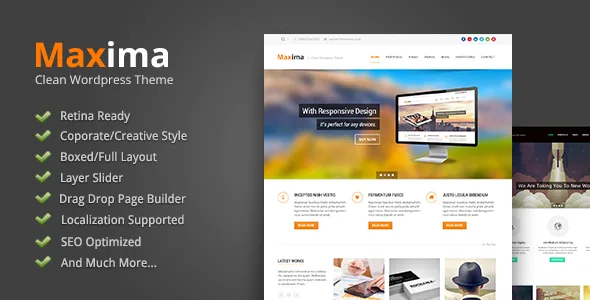
GoodLayers' own feature list for Maxima puts colour control near the centre of the pitch. One line promises a Live Color Changer backed by the Theme Customizer, where colours can be changed with the front end in view. Another says almost every element's colour is reachable through a colour picker in the admin panel. Read together, those two lines describe a theme where the visual identity is tuned from a settings screen rather than by editing stylesheets.
That matters for who can maintain the site. If the person responsible for brand colours is comfortable in PHP and CSS, a settings panel is a convenience. If that person is a marketing generalist, the panel is the difference between making the change and filing a ticket.
The theme also declares a drag-and-drop page builder. The vendor's description does not name which builder, and no hands-on check was done here, so treat the builder claim as a starting question for the demo rather than a settled part of your workflow.
One-click levers you will actually use
Several of Maxima's design choices are presented as switches rather than layouts you rebuild. The site skeleton can run boxed or full width, described as a single-click change. That is a visible decision: a boxed site sits inside a background area, which is what the 15 overlay patterns are for, while a full-width site lets the background patterns go unused.
Footers come in six variations, enough that the bottom of a page can carry contact details, a map or a slim legal strip without custom work. Blog listings offer three styles, each able to run with a left sidebar, right sidebar, both or none, so an editorial layout and a wide single-column feed can coexist on the same site. Sidebars themselves are described as unlimited and assignable per page, which is the useful part — a services page and a news page can carry different widget columns.
Typography is declared as 500+ Google Fonts, and the slider manager is drag-and-drop with Flex Slider and Nivo Slider named as the engines. Blog and portfolio thumbnails can be a static image, a slider or a video, which is a small feature that separates a plain archive from one where an entry can lead with motion.
Content types Maxima ships itself
The vendor lists five custom post types — Gallery, Portfolio, Testimonial, Price and Personnel — plus shortcodes for a price table, a process bar and personnel. These are the parts of a corporate site that usually mean installing a page-builder add-on pack or two extra plugins. Having them in the theme saves that assembly step and keeps the output consistent with the rest of the design.
For a services business, the practical read is: pricing tiers, a how-we-work sequence and team profiles can all be edited as their own content rather than pasted as HTML into a page. Portfolios and galleries get their own archive structure instead of lumping case studies in with blog posts.
Attribution matters here. These are features the vendor describes; they were not installed or used in this review, so the honest position is that they exist in the feature list and should be inspected in the demo before you plan a site around them.
Translation: two routes in the same panel
Maxima handles localisation in a way that suits translators and non-translators differently. A .pot file is supplied as a starting point for producing .mo files, which is the conventional route and works with standard translation tooling. Separately, the vendor describes a built-in translator that lets you translate the site through admin options without touching .mo files at all.
The second option is aimed at a site owner shipping one extra language quickly; the first is the one a translation agency will expect. WPML is declared as a compatible plugin, which would matter if the site needs more than the theme's own strings translated — for example, a shop or a set of custom post types maintained per language. Compatibility is a vendor declaration: confirm it against the current releases of both before committing a multilingual build.
Where the theme shows its age
Two items in the vendor's list point to a theme with a long history. The font uploader accepts Cufon files from the admin panel — Cufon was a JavaScript font-replacement technique that fell out of use once web font serving became practical. It is not a feature you would build around in 2026. The declared browser list includes IE11, which says the support matrix was written some time ago.
A third detail is a scope limitation rather than an age signal: Photoshop source files are included only for the Corporate layout, not for every demo or page type. If layered design sources are part of your handoff to a designer, that covers one layout, so plan on recreating the rest.
None of this makes the theme unusable. It does mean you should look at how it behaves with current plugins rather than assuming the listing's age-agnostic feature names describe a modern build.
Declared compatibility, read carefully
The marketplace attributes recorded on 4 November 2026 state WordPress 6.1.x through 7.0.x as compatible versions, WPML as the named integration, and PHP, CSS and JS as the packaged file types. The marketplace listing itself was at version 1.4.1, with the last vendor update logged on 13 October 2026.
Those are declarations attached to the listing, not results from an installation. A version range that broad is normal on older items, but it is not a substitute for seeing the theme run on your stack. The cheapest way to settle it is a staging install with the plugins you actually intend to use — a multilingual plugin, a shop plugin if Maxima's WooCommerce support matters to you, and whatever handles forms.
Documentation is marked as well documented, and the vendor points to a video walkthrough for setting the theme up as the demo site. That video is the fastest way to judge whether the admin panel feels like a tool you want to work in every week.
Questions & answers
Does Maxima require a page builder plugin?
The vendor lists a drag-and-drop page builder as a theme feature but does not name it in the description, and the built-in shortcodes, slider manager and custom post types are described as part of the theme. Check the demo and the current documentation to see which builder the theme actually uses before you plan page composition around it.
Can the demo content be imported?
The vendor includes a video tutorial for setting the theme up as the demo site, which is the documented route for reproducing the demo. The description does not spell out a one-click importer, so follow the video rather than assuming a single import button.
Is Maxima suitable for a multilingual corporate site?
WPML is declared as compatible, and the theme ships both a .pot file and its own admin-panel translator. The built-in translator is convenient for a two-language site; a larger multilingual build should be checked against WPML's current release on a staging copy.