Post formats carry more weight here than the demo grid
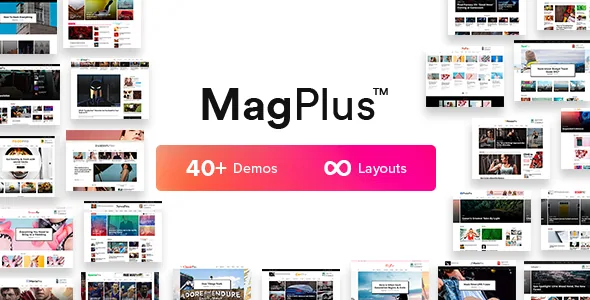
Plenty of magazine themes are a homepage grid with a blog bolted underneath. The vendor description for MagPlus spends its longest stretch on content types instead, listing custom post formats for Standard, Video, Gallery, Audio, Review, Quote and Quiz. That set changes what an article can be. A Quiz post is not a styled paragraph; it is an interactive item with its own structure. An Audio post puts a player where a featured image would sit. Review posts get their own treatment, and Quote posts are short typographic pieces that would otherwise need manual HTML each time.
If your publishing plan leans on product reviews, personality quizzes, podcasts or pull-quote commentary, those formats are the part to check on the demo before anything else. The description does not explain how far the quiz logic goes, so the live preview is where to settle whether it matches how you would actually publish. Gutenberg Optimized is marked Yes in the marketplace attributes recorded on 4 November 2026, which suggests block-editor content is considered supported alongside the theme's own formats. That is a listing declaration, not a result from writing and publishing every format on a test install.
Reader reviews sit inside the article, according to the vendor
The description claims a built-in review system that lets readers or viewers give reviews on review-type articles. The distinction matters: a review article that invites reader scores is a different feature from a star rating you assign yourself in the editor. The vendor does not describe moderation settings, score scales, schema output or how reader reviews are displayed next to the editorial score. If reader-submitted ratings are central to your plan, inspect the Review format in the public demo and confirm the submission flow works the way you expect.
The front page is assembled from story blocks, not one hero layout
MagPlus ships 33 shortcodes through a custom-built plugin, according to the vendor, and the named list is telling. It includes Weekly Top 5 Blog, Weekly Top 7 Blog, Hand Picked Blog with six style options, Post Grid Series, Featured Blog with six styles, Category Block, Recent News, Post Movie, Post Video Playlist, YouTube Video Playlist, SoundCloud, Newsletter with two styles, and Custom Ads.
These are editorial units rather than generic layout sections: ranked lists, editor-selected picks, category clusters, video rails. A magazine homepage is usually a stack of exactly those. Building one means placing the blocks in the order you want stories to appear, then repeating the exercise for section fronts. The vendor also mentions pre-made templates for grouping shortcode blocks and a one-click import for the demo sites, so imported content gives you a starting arrangement rather than a blank page. Editing an imported template affects that page; it does not automatically propagate changes to other pages that use a similar block.
Advertising placement and sidebars as settings, not template edits
The description gives advertising its own bullets: built-in ad locations, a Custom Ads shortcode, and a mega menu configured from the standard WordPress menu screen with Font Awesome icons on menu items. For a publication that sells display space, placing an ad inside a story feed without editing templates is the practical requirement, and a dedicated shortcode is a cheaper route than adding a separate ad plugin for simple placements.
The same section covers unlimited sidebars: you can create as many as you need, assign widgets to each, and switch their placement. On a magazine site that usually means one sidebar for the homepage, another for a category archive, and possibly a different one for long-form article pages. The vendor states the placement is movable but not how per-section assignment is scoped, so test that on a category archive before building around it.
AMP, cache and speed figures are vendor claims
The headline line lists AMP with "5x faster loading in mobile" and a custom cache system with "2.4x faster." Those are the vendor's numbers, published without a stated testing method, device profile or baseline site, so they describe intent rather than a measured result you can count on. The cache system is described as theme-provided, which raises the usual question of whether it plays well with whatever caching layer your host already runs.
Translation is described more concretely. The theme is listed as WPML compatible with RTL support for Arabic, Hebrew and similar languages, plus a language switcher in the sub header. WPML also appears in the marketplace compatibility attributes. For a bilingual or right-to-left publication, the switcher's position in the sub header is a small but real layout decision: it determines whether language choice is visible without opening a menu.
Elementor is named, but the description still speaks shortcode
The marketplace attributes observed on 4 November 2026 list Elementor, Gravity Forms, WPML and Bootstrap 4.x as compatible, with the layout marked responsive, widget ready, 4+ columns and well documented. WordPress is listed from 4.9.x through 7.0.x, and packaged files as PHP, CSS, JavaScript and layered PNG.
The vendor description, though, references Visual Composer in the mega menu and advertising sections and builds its layout story around shortcode blocks. The product title says Elementor, and Elementor is listed as compatible, but the two do not fully agree about which editing environment the pre-built pages assume. Before committing, open a demo page and identify which builder its content actually runs on. If you plan to extend pages in Elementor, confirm on staging that the imported layout is editable there rather than only through shortcode blocks. Everything in this section is a declaration from the listing, not a result from running MagPlus on a particular WordPress install, so check it against your own stack if you sit at either end of that version range.
Questions & answers
Can readers submit their own ratings on review articles?
The vendor says yes: the description lists a built-in review system where readers or viewers can give reviews on review-type articles. Details such as score scales, moderation and how reader scores appear next to the editorial rating are not described, so check the Review format in the demo.
Do the shortcode-based homepage blocks work in Elementor?
The vendor describes the 33 shortcodes as delivered through a custom plugin and lists Elementor as compatible, while the description still mentions Visual Composer. Identify which builder the pre-built demo pages actually use on the live preview before planning an editing workflow around it.
Is MagPlus suitable for a right-to-left publication?
The vendor lists RTL support for languages such as Arabic and Hebrew alongside WPML compatibility, with a language switcher in the sub header. That is a vendor statement; inspect an RTL layout in the demo if the mirrored layout is central to your site.