Four list layouts, four families of project page
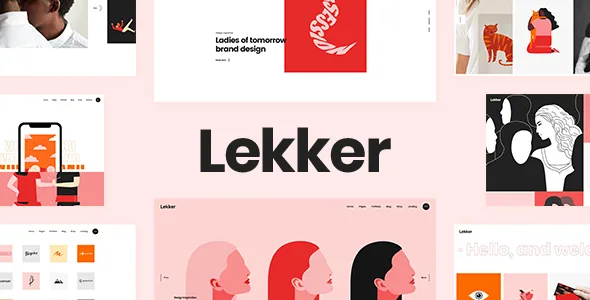
The vendor's feature list spends most of its length on one subject: how a portfolio gets displayed. There is a Portfolio List shortcode with four layouts named Gallery, Masonry, Slider and Justified Gallery, and then a separate set of single-project layout families: Multiple Portfolio Masonry Single layouts, Multiple Portfolio Gallery Single layouts, Multiple Portfolio Images Single layouts and Multiple Portfolio Slider Single layouts.
Read those two lists separately, because they answer different questions. The list layouts decide how the archive of projects reads. The single layouts decide what happens once a visitor opens one project, and the vendor offers four families there rather than one template with variations. A photography set with mixed crops suits masonry; a tightly curated illustration series reads better in a gallery; a project that needs a paced sequence gets the slider; a long image essay gets the images layout.
That matters most if your projects do not look alike. A single project template forces consistency, which is fine for case studies but awkward when one project is twelve vertical shots and the next is three wide stills.
Elementor or the block editor, with a plugin on each side
The vendor describes the theme as usable with Elementor or with Gutenberg "in tandem" with the Qi Blocks for Gutenberg plugin, and lists Qi Addons for Elementor as a compatible companion. Both appear in the marketplace compatibility attributes, and Gutenberg Optimized is set to Yes.
The pairing is not symmetrical in practice. On the Elementor route, Qi Addons for Elementor extends the element set inside a builder you already know. On the block route, Qi Blocks for Gutenberg is what supplies the theme's own blocks, so installing it is part of choosing that route rather than an optional extra. The changelog shows Qi Blocks being added as a required plugin in version 1.7, the same release that added a Gutenberg demo import option, which fits the idea that the import step accounts for whichever stack you intend to use.
One further entry in the compatibility attributes, WPBakery Page Builder, does not appear in the vendor's prose about how to build pages. Treat it as a declaration in the listing rather than a sign that the demos are built that way.
The shortcodes are where the theme's character shows
Between the portfolio layouts and the builder sits a long shortcode library, and three entries say more about the intended look than the rest: Interactive Link Showcase, Image Marquee and Text Marquee. Those are the scrolling and hover-driven elements that make a creative studio landing page feel in motion, and they are the reason the theme reads as designed rather than assembled.
The remainder is a broad but conventional set: Pricing Table, Clients List, Team List, Testimonials, Progress Bar, Counter, Countdown, Call to Action, Video Button, Icon List Item, Dropcaps, a customizable Google Map, plus Blog List and Image With Text. Product List and Product Categories List sit in the same library, so shop items can be dropped into a page you are otherwise composing by hand. The vendor also lists custom post formats for Standard, Gallery, Link, Quote, Video and Audio posts.
Header options deserve a mention alongside the shortcodes because they change how much room a layout gets. Standard, Vertical, Minimal and Vertical Sliding headers are offered, each available with sticky, fixed or sticky-only-on-scroll-up behaviour, with separate logo versions for normal, sticky and mobile, and separate logos for dark and light header skins. A vertical header takes width away from a full-bleed gallery; a minimal header gives it back.
Commerce arrives as a wishlist layer
The headline commerce claim is full compatibility with the QODE Wishlist for WooCommerce plugin, which lets visitors build and share lists of products they are interested in. The changelog records the arrangement tightening over time: version 2.0 set WooCommerce as a required plugin and added QODE Wishlist for WooCommerce as required, and version 2.1 added QODE Quick View for WooCommerce, also as required.
So a shop is a supported path rather than the theme's centre. A designer selling prints, or a studio with a handful of objects, gets a catalogue with saved lists and can place Product List shortcodes inside portfolio pages. Because WooCommerce is listed as required from version 2.0 onward, a site built only on portfolio pages still carries that dependency; confirm against the documentation for the version you run if you have no intention of selling.
The maintenance trail is current enough to note: version 2.3 improved the WooCommerce figure CSS selector, a small change that suggests storefront styling is being kept up rather than left at its 2024 state.
Slider Revolution inside the package, and what that implies
The feature list states that the Slider Revolution responsive WordPress plugin is included, with a stated value of $109, and the changelog tracks it release by release up to 6.7.58 in version 2.3. It is the component behind the slider layouts, so the portfolio slider single family and the demo slideshows depend on it.
That inclusion is a vendor statement about the marketplace package. It says nothing about which plugin terms travel with a particular copy of the theme you might obtain, so read the bundled plugin's own documentation rather than assuming the terms carry across.
WPML support appears in both the compatibility attributes and the changelog: version 2.2 added a WPML config file and version 2.3 updated it. The vendor also lists the theme as translation ready, with a child theme included and Contact Form 7 compatibility.
What the listing declares, observed 4 November 2026
The marketplace attributes recorded on that date declare WordPress 6.5.x through 7.0.x and WooCommerce 8.x, 9.x and 10.x, alongside Elementor, Block Editor, WPBakery Page Builder and WPML. The layout attribute is Responsive, the package is described as PHP, CSS and JS files with documentation listed as well documented, and the marketplace's latest version is 2.3, with a vendor update dated 26 June 2026.
These are declarations, not the results of running the theme on a test install. The version range describes the release the author is currently supporting, so a copy built from an older release is not covered by it. The changelog shows how much that matters here: the theme runs back to version 1.1 in August 2020, and compatibility entries are added release by release, including WordPress 6.5.3 and WooCommerce 8.8.3 in version 2.1, improved PHP 8.3 compatibility in version 2.2, and a Firefox page spinner fix in version 2.3. Match the version you have against the WordPress and WooCommerce releases on your server instead of reading the top-line range as a blanket guarantee.
One vendor note sits outside all of this and is easy to miss: the images used in the demos are presentational only and are not licensed for your site. The one-click demo import gives you structure and spacing; the photography has to be your own or separately licensed.
Questions & answers
Can I build Lekker pages in the block editor instead of Elementor?
The vendor describes both routes: Elementor, or Gutenberg together with the Qi Blocks for Gutenberg plugin. The listing marks the theme as Gutenberg Optimized and names Block Editor among compatible software. On the block route, install Qi Blocks, since that is what supplies the theme's own blocks.
Do I have to run WooCommerce if I only want a portfolio?
The changelog for version 2.0 records setting WooCommerce as a required plugin and adding QODE Wishlist for WooCommerce as required, with Quick View joining in version 2.1. That is a packaging decision the feature list does not explain, so confirm it against the documentation that ships with the version you use if a shop is not part of your plan.
What happens to a portfolio layout if I switch headers?
A vertical or vertical sliding header occupies width on the page, so a full-bleed gallery or slider has less room to work with, while a standard or minimal header frees it up. The vendor supplies separate logo versions for normal, sticky and mobile headers, plus dark and light skin logos, so the header pick and the portfolio layout pick are worth deciding together.