The listing type is the unit of configuration
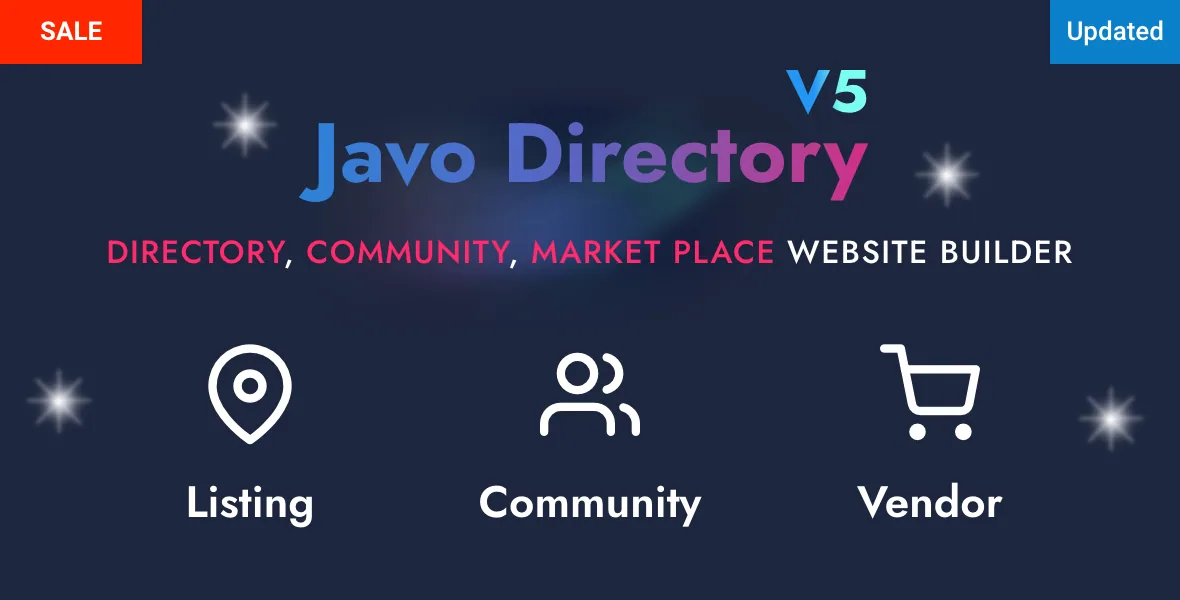
The vendor's feature list makes a claim worth taking literally: you can create unlimited listing types, and each one gets its own custom fields, taxonomies and submission form. That is not a styling choice. It is the object the rest of the theme hangs from.
Read it against a real project. A directory mixing holiday rentals, restaurants and service providers does not need three page templates; it needs three types, each collecting different data through its own form. Decide the types first, because fields you add later ripple outward into the price table, the search form and the per-type email notifications the vendor also describes.
Pricing is generated from your fields
The vendor says the price table is generated automatically as you set up your fields, and that a detail-and-payment builder lets you customise pricing packages and assign a different template to each. The commercial side of the site is therefore derived from the content model rather than assembled separately in a shop plugin.
The v5.2 changelog of 22 May 2026 adds controls for listings with and without membership, including membership badges and package-based display, and reports reworked payment, checkout, package usage, order action and renewal behaviour. Treat that as the vendor's account of a paid-listing flow it has been actively working on, not proof that a particular gateway will behave on your server. If the directory is meant to earn money, package and renewal logic is what to test first.
Search, filters and the map
Two visitor-facing features are named in the feature list: a search form builder for a flexible search form, and listing filters added "with just a few clicks". The interesting work in the recent changelog sits where those controls meet the map. v5.2 adds map drawing and OpenStreetMap drawing support, map zoom controls and a search-this-area behaviour, plus Google search support inside listing search forms with revised latitude and longitude handling for Google Maps searches. It also reports improvements to map/list block synchronisation, geolocation and haversine distance filtering, marker and cluster behaviour, and responsive map/list toggling.
For a location-based directory, that combination is the practical question: does the map behave on a phone when the list sits beneath it, and do clusters keep a dense city centre readable? The changelog says those areas were worked on; it does not say how they will handle your data volume.
The dashboard is a second design surface
Listing owners spend their time in the logged-in screens, not your homepage. The vendor's dashboard covers orders, favourites, reviews, profile screens, a home panel and notifications, and v5.2 reports improvements across all of them along with custom buttons, logo display and dark/light styling. An earlier entry, v5.10, records a "Dashboard skin" option under Elementor page settings, which suggests the dashboard can be styled apart from the public site.
That changes how you budget the build. Plan the logged-in screens as their own surface with a distinct type scale and spacing instead of assuming the front-end look carries over. The same feature list offers author widgets and an author page builder for listing owners, the other place a member's identity shows up.
Claiming and verification are treated as workflows
Directories need a route for a business to take over a listing a visitor created. The vendor describes improved claim and email verification workflows in v5.2, covering admin emails, reminder and welcome messages, claim timeline and status handling, approval notices, and attachment handling. The same entry records fixes for edge cases: duplicate emails, empty status values, visitors who are not logged in, and conflicts between approval and automatic verification.
If claiming matters to your business model, the thing to establish is how a disputed claim appears in the admin, not just whether the button exists.
Elementor, widgets and the Gutenberg question
The marketplace compatibility attributes list Elementor, WooCommerce 6.x through 8.x, BuddyPress 9.x and 10.x, bbPress 2.5.x and 2.6.x, Events Calendar, Bootstrap 4.x and 5.x, and Facebook. The same listing records the theme as widget ready, documents it as well documented, and includes PHP, CSS and JS files.
One attribute deserves care. Gutenberg Optimized is recorded as "No", which tells you the vendor has not declared block-editor optimisation. It does not mean the block editor is unavailable to you, and page building is presented through Elementor plus the theme's own drag-and-drop builder and options. The vendor text also credits a "No.1 Framework" without naming it, which is marketing wording rather than a technical fact to build on.
What the version record establishes
As observed on 3 November 2026, the marketplace listing showed version 5.2 with 7,459 sales and a 4.61 average across 660 ratings, and the vendor's update stamp read 24 May 2026. The changelog behind that release runs back through 5.15 in February 2025 and earlier entries to mid-2023, which gives a rough sense of cadence rather than a service-level promise.
The most recent notes are specific: PHP 8.0 through 8.4 compatibility work in Javo Core, fixes for WordPress 6.7+ translation loading warnings, more reliable creation of the required core tables during activation, and build dependencies hardened with npm advisories patched. Declared software support in the attributes stops at WordPress 6.5.x, and a v5.11 entry mentions a WordPress 4.6.x fix; both are listing declarations, not tested results on your stack. Confirm them on a staging copy with your own plugin versions.
Questions & answers
Can one Javo site host several kinds of listings?
According to the vendor, yes: listing types are unlimited and each carries its own custom fields, taxonomies and submission form. Search forms, filters, price tables and email notifications are then configured around those types.
Can I run paid listings without adding a separate membership plugin?
The vendor describes payment packages, an automatically generated price table, membership and non-membership listing controls, and renewal behaviour as part of the theme, with WooCommerce listed among compatible plugins. How far the built-in flow matches your pricing model is something to settle in a test build.
Is Elementor required to build pages?
The marketplace lists Elementor as compatible and the vendor describes customising pages with it, alongside its own drag-and-drop builder and detailed options. Elementor is not stated as a mandatory dependency for every layout.