Donation routes are the theme's actual subject
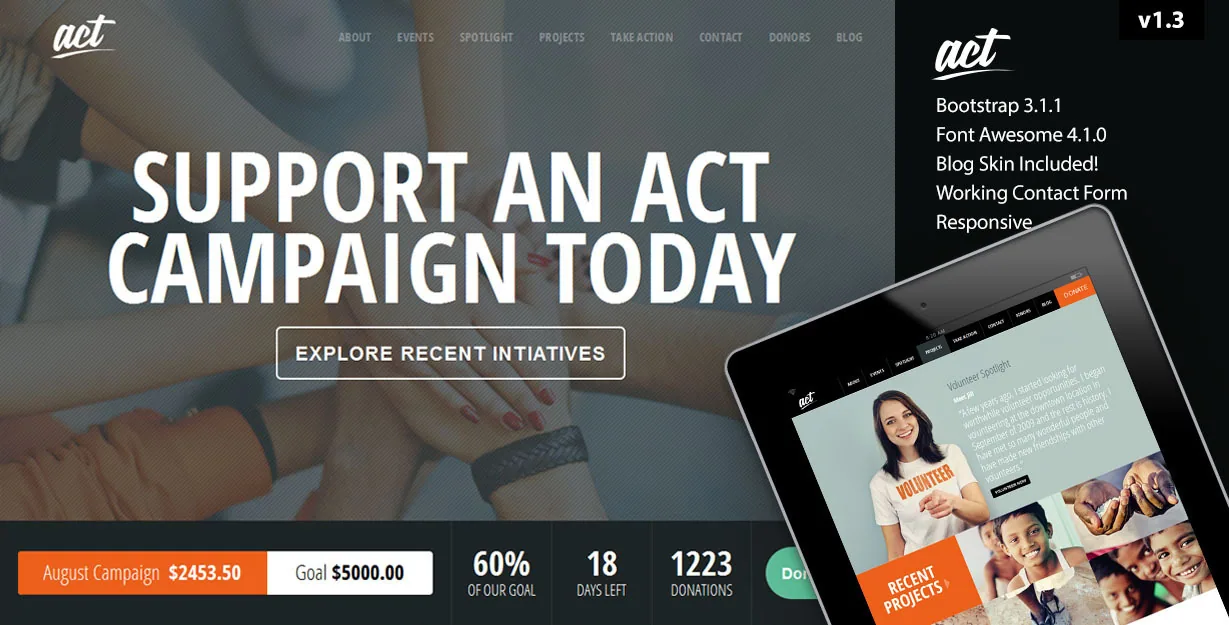
Read the feature list and the money handling comes first: GiveWP Donation, Stripe Donation, PayPal Donation, Offline Donation, a Crowdfunding System and a Donate Section. That grouping is what separates Act from a charity theme that treats donation buttons as an extra. Each route answers a different situation. GiveWP covers campaign-style giving where donors pick from listed causes. Stripe handles card payments directly. PayPal covers donors who keep a balance there, and the offline option records gifts that arrive by cheque, bank transfer or cash so the totals in one place stay honest.
The changelog shows these were built in over time rather than shipped at once. Version 2.0 added Stripe, Authorize.net and offline donation and made the fundraising bar automatic; v2.9.6 integrated the GiveWP plugin. If you plan to use Authorize.net, note that it appears in that older changelog entry and not in the current feature list, so confirm it against the version you intend to run before counting on it.
What the theme does not supply is a payment account. Every route depends on your own merchant or gateway setup, and the crowdfunding machinery only produces money once one of those is connected.
Causes and events as the repeating structures
A charity site is not a stack of unique pages. It usually needs a cause template that can hold campaign after campaign, a listing of upcoming events, a detail page for each one and a calendar view. The seller's changelog lists the Causes page and crowdfunding system as completed, alongside event list and details pages and an Events Calendar, and an events calendar also appears among the declared compatible plugins.
That distinction matters when you plan the content model. A cause page carries a goal, a running total and a way to give; an event page carries a date, a place and a reason to attend. If your organisation runs both fundraising appeals and volunteer days, you are building two separate content streams rather than reusing one template for everything.
The events side depends on the calendar plugin being present. Compatibility is a declaration from the seller's listing observed on 3 November 2026, not a guarantee against the calendar plugin version and settings you happen to install, so test the list, detail and calendar views together on a staging copy before a campaign goes live.
WPBakery came first, Elementor much later
Both page builders appear in the feature list, but the record shows they did not arrive together. Version 2.0 added a page builder, named then as Visual Composer — the earlier name for WPBakery Page Builder — and the changelog updates it release after release. Version 3.1.4 is where an Elementor demo was added, with Elementor listed for update in 3.1.7.
For a practical decision, that history suggests WPBakery is the more deeply travelled path: more of the changelog's layout work sits there. Choosing the Elementor demo means starting from a newer addition rather than the theme's original structure. Either is a legitimate starting point, but you should pick one and let the demo you import reflect it, because mixing layouts built in two different builders inside one site is the kind of tidying nobody budgets for.
"Gutenberg Optimized" is marked No on the theme listing. That describes how the theme is tuned for the block editor; it does not mean the block editor cannot be used. If your writers compose in blocks, build a full article and an archive view on your install before committing a publication to it.
Theme options keep pages consistent without editing templates
The seller lists an Advanced Theme Options Panel with colour customisation, unlimited Google Fonts, and typography controls for font family, size and colour. In practice that means the site's palette and type scale are set once and inherited, rather than restyled section by section — which is what you want on a site where dozens of campaign pages are published by people who are not designers.
Translation runs through .po files, so the interface strings can be translated into another language. That is a file-based workflow, not a language-switcher setup; WPML also appears in the declared compatible plugins for sites that need parallel language versions of the same content.
One wording detail is worth flagging for anyone who cares about markup: the description says the theme is built on Bootstrap 3, while the marketplace attributes list Bootstrap 4.x. The two claims conflict, so treat the framework version as uncertain and check the stylesheets in the actual package rather than assuming either one.
Where a shop sits next to a donation form
WooCommerce is listed as a compatible plugin, along with shop pages and a version range covering WooCommerce 7.x through 9.x per the listing observed on 3 November 2026. For a nonprofit, that covers the second revenue stream many organisations end up needing: merchandise, ticketed goods, or branded items sold rather than donated.
Keep the two flows conceptually separate when you build. A donation asks for an amount with nothing in return except a receipt; a shop purchase has a product, a quantity and a fulfilment step. Both can coexist on one site, but the campaign pages should route donors to giving, and the shop should look like a shop. Recent changelog entries are dominated by WooCommerce file updates, which tells you the commerce side is maintained actively — useful if the shop is more than an afterthought.
What the long changelog says about the codebase
Act is not a young theme. The changelog runs through years of releases, and the bulk of the entries are plugin version bumps: WooCommerce, Revolution Slider, WPBakery, the Klb Shortcode plugin, the Envato Market plugin. That pattern describes upkeep rather than redesign, and it is the most useful thing you can read from the history.
The declared software range runs from WordPress 6.1.x to 6.9.x, and the browser list still includes IE9 through IE11 alongside current browsers. The old browser entries are a marker of how long this codebase has been in circulation rather than a requirement you should design for. The marketplace listing records 1,901 sales and a 4.2 rating across 82 ratings, with the latest version at 3.1.8 when observed on 3 November 2026.
Those version ranges are the seller's statements. They do not record how the theme behaves against your PHP build, your caching setup or your specific plugin combination, so reserve an hour for a staging install before you promise a launch date.
Package contents and the material you provide
The file list names PHP, CSS and JavaScript files, and the seller describes the theme as well documented with an online doc plus one-click demo installation. A theme setup wizard was added in v3.0.2, which is the route most people will take to get the demo layout in place before replacing the copy.
No demo will give you the things a charity site actually runs on. Campaign stories, beneficiary photography, the legal wording for gift aid or tax treatment, board and trustee names, annual report PDFs and the payment account itself all have to come from your organisation. The demo's images are the demo's, so plan the photo shoot or the image licence purchase alongside the build, not after it.
Questions & answers
Can I run Elementor and WPBakery layouts on the same Act site?
Technically both builders are listed as supported, but they arrived at different points: WPBakery (as Visual Composer) from version 2.0, Elementor with a demo added in 3.1.4. Pick one builder and import the matching demo. Mixing layouts built in two systems creates cleanup work that the theme options panel cannot undo.
Does Act handle recurring donations?
Nothing in the supplied feature list mentions recurring or subscription giving. The stated routes are GiveWP, Stripe, PayPal, offline and a crowdfunding system for causes. If recurring gifts are central to your fundraising, verify that capability in the donation plugin you connect rather than assuming it comes from the theme.
Is the Events Calendar plugin required for the event pages?
The theme's feature list includes event list and detail pages plus an Events Calendar, and the calendar plugin appears among the declared compatible plugins. Treat it as part of the setup rather than an optional extra, and test the list, detail and calendar views together before publishing a schedule.
Which Bootstrap version does Act use?
The seller's description says Bootstrap 3, while the marketplace compatibility attributes list Bootstrap 4.x. The two claims disagree. Check the stylesheets and markup in the package you use instead of planning custom overrides around either version.