The importer carries the sliders and widgets with it
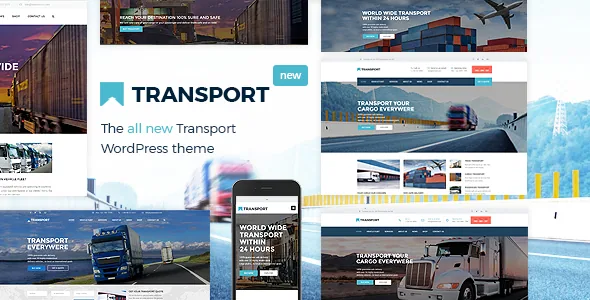
Most themes ship demo content that stops at pages and posts. Anps makes a more specific promise for Transport: you are "one click away" from a working demo that includes all the sliders and widgets, with no additional imports required. The vendor singles the importer out as the piece they are proudest of, which tells you where they expect your first hour to go.
On a freight or courier site, that matters less for the copy than for the building blocks. Hero sliders, fleet and capability sections, service grids and footer widget areas are exactly the parts people rebuild by hand when a demo import only delivers text. If the vendor's description holds, those arrive configured.
It is a vendor claim about intended behaviour, not something verified here on a fresh install, and demos differ from one another.
The description is inconsistent about how many demos exist. The reasons block says "8 transport demos"; the later what-you-get list says "6 install ready demos". A January 2018 changelog entry records two demos being added, so the figure has grown over time while the copy has not kept pace. Judge the demo set by what the live preview shows, and pick the layout closest to your business before importing — the bundled widget and slider settings make switching demos later more than a restyle.
WPBakery first, Elementor since the 2026 releases
Transport's editing model is WPBakery Page Builder, described in the feature copy under its old name, Visual Composer, and listed as included. The vendor's customization pitch is drag-and-drop editing of pages, sections and content without code, and Revolution Slider is bundled for animated hero sections and slides you can place anywhere on the site.
The changelog adds a second route. Version 4.0.0, dated 15 July 2026, lists Elementor support, and version 4.0.1 a month later adds an "Elementor demo 9"; both note that theme and plugin files changed. That is the whole of the Elementor documentation — the feature highlights and the what-you-get list still describe WPBakery as the page-building tool.
If your team already works in Elementor, that gap affects what you can assume. Nothing in the description says existing demos were rebuilt in Elementor, so check which editor the specific demo you want is assembled in rather than planning to import a WPBakery layout and continue in Elementor.
Page-by-page settings sit next to the site-wide ones
Styling is handled on two levels. A theme options panel covers site-wide settings, and the vendor explicitly points people who find it uncomfortable to the WordPress Customizer instead. Because both exist, decide early which one owns a given change: two places that edit similar things can send you hunting when a setting appears not to apply.
The second level is per-page options, which the vendor describes as controls that let each page carry its own settings. That suits a logistics site where the quote request page, the services index and the company history page want different widths and header treatments.
The shell has its own switches. A boxed layout sets an image, pattern or solid colour behind the content so the site sits on a visible background, and the vendor lists four predefined colour schemes with a broad colour palette for adjusting the rest.
Shop templates have tracked WooCommerce release by release
Transport is marketed as WooCommerce ready, for selling services or taking payments. The theme carries its own templates for cart, checkout, account and product pages: the changelog names files under woocommerce/cart, woocommerce/checkout, woocommerce/myaccount and woocommerce/single-product, plus notice templates and the mini-cart.
That file list explains the release pattern. Almost every WooCommerce update in the changelog comes with a matching theme release — support for 9.x versions through 2024 and 2025, then WooCommerce 10.1.0 in version 3.2.9 — because overridden templates need auditing when the plugin changes. When the marketplace fields were observed on 4 November 2026, they listed WooCommerce 5.x through 10.x as compatible.
Language support comes in two parts. The vendor says RTL-specific stylesheets are included for right-to-left languages such as Arabic and Hebrew. WPML compatibility is listed separately, and a November 2024 release fixed translation loading in the theme and its companion plugin. Both describe bundled support; configuring the multilingual plugin remains your step.
Blocks are supported, but the demos are builder layouts
The listing marks Transport as Gutenberg optimized and compatible with the Block Editor, and a 2020 changelog entry records block builder support being added. That means the block editor works with the theme. It does not mean the demo pages are block-built: their section layouts come from WPBakery, and newer demos may come from Elementor.
Other declared compatibility, observed on 4 November 2026, covers WordPress 4.9.x through 7.0.x, Bootstrap 4.x and 5.x, Contact Form 7, WPML, and both page builders. Those ranges are broad claims stored on the listing rather than results from running the theme on a host, so check the WordPress and WooCommerce versions your host runs against them.
One more detail for planning: the files field lists PHP, CSS and JavaScript, and the vendor supplies extended documentation. A 2023 release added PHP 8.0 support.
Questions & answers
Does the demo import really include sliders and widgets?
The vendor says the importer delivers a fully functional demo with all sliders and widgets and that no additional imports are required. That is a description of intended behaviour rather than something verified here. Because demo bundles differ, confirm against the preview for the demo you plan to use.
Can I build Transport pages in Elementor?
Elementor support was added in version 4.0.0 in July 2026, and version 4.0.1 followed with an Elementor demo. The vendor's feature copy still describes WPBakery as the editing tool, and the description does not state that older demos were converted, so check how a particular demo is built.
Which WooCommerce versions does Transport list?
The marketplace compatibility fields, observed on 4 November 2026, name WooCommerce 5.x through 10.x. The changelog shows theme releases tied to individual WooCommerce updates because the theme overrides shop, cart and checkout templates. Those figures are vendor declarations, so match them against the plugin version you actually run.