Pricing by sides or by elements, not by product picker
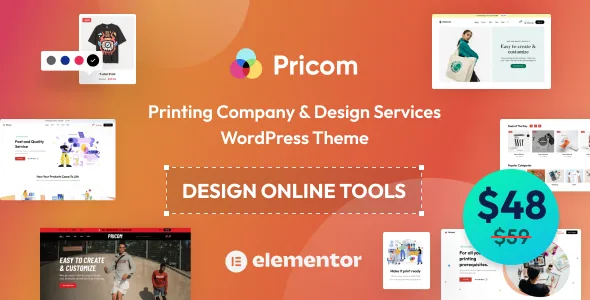
A print shop rarely sells a fixed object. A poster costs one amount printed on one side and another on two; a banner carrying a logo, an address block and a crop mark is really a sum of the parts placed on it. HaruTheme's item description treats that arithmetic as the theme's centre, with separate demos for Print Price based on Sides and Print Price based on Elements, plus a video tutorial for a Mask Converter.
The changelog dates the capability precisely. Version 1.9.1, June 11, 2026, adds what the vendor calls the WCDP AI POD Addon with those three parts: Mask Converter, Price based on Sides and Price based on Elements.
Side-based pricing reads naturally for work where a customer chooses a quantity and a print configuration — one-sided or two-sided — and the total follows from that count. Element-based pricing suits a shop that charges per printed component inside a design, so every placed element adds to the price. If you quote either way, the theme is designed with that sum in mind. If your price list hinges on stock weight, lamination, size tiers or turnaround, the description doesn't show those dimensions; run your own rules through the demos rather than assuming they are covered.
The design canvas belongs to a plugin you install
The feature list names tools rather than claiming an engine: compatibility with WooCommerce Product Designer and NBDesigner, with Dokan for multivendor marketplaces, and with the Printful and Printify integrations for WooCommerce. Changelog entries also record compatibility work with Fancy Product Designer, WPC Product Options and YITH Compare at different points.
Read that as integration claims. Pricom is not described as shipping its own canvas. Layers, uploads, the editing surface and pricing hooks come from whichever designer plugin you add. The theme's contribution is the storefront around it — product pages, catalogue, cart and the Elementor layouts those sit in.
That split shapes planning. If your shop already runs on one of those plugins, Pricom is positioned as a theme that accommodates it. If you have no designer yet, the theme alone won't give a customer a canvas; the plugin, and its own licence, is a separate decision. Printful and Printify sit at a different stage: fulfilment, not artwork editing.
The designer has its own release track, and one entry matters
Version 1.8.1, August 19, 2025, records updating WC Designer Pro to 1.9.27 to fix a vulnerable function in wcdp_save_canvas_design_ajax(), the routine that saves a customer's canvas design. Later entries move the plugin to 1.9.28, 1.9.32 and 1.9.33 in January 2026.
That pattern tells you how to plan maintenance. The designer is a separately numbered product, and the theme changelog reports when it moves. For a shop accepting artwork from the public, a save endpoint is reachable from the front of the site, so a patch there carries more weight than a styling fix.
Your security posture therefore isn't set by the theme release alone. When Pricom updates, note which designer build it brings, and keep that plugin's own update channel in view if you licensed it independently. The description calls the integration compatible; it doesn't promise the plugin is patched for you.
Header, footer and mega menu are Elementor layouts
HaruTheme lists 14+ pre-made header styles and 10+ footer styles, each described as built in an Elementor header and footer builder, plus a mega menu builder in the same editor. That matters for a print catalogue more than for a brochure site: one bar has to carry product groups with size or material submenus, a cart, an upload or quote prompt, and often a trade phone line.
Because these are layouts rather than switches, you can restructure the bar as the catalogue widens instead of squeezing content into fixed slots. The mega menu earns its place when a top item must open into columns — signage, stationery, finishing, artwork templates.
Elementor runs the design surface, and the marketplace attributes observed on 4 November 2026 list Elementor and Elementor Pro as compatible. Gutenberg Optimized is marked No, which says the described workflow isn't block-editor templates; it doesn't mean the block editor stops working. If your team writes pages in blocks and expects them to look designed, resolve that mismatch before buying.
Homepage count and package contents
The starting set is 14+ homepage versions, 3+ blog page styles and one-click demo installation. For a print business the homepage count is mostly a choice of which starting point fits: a shop-led front page, or a services-led one for a company that also brokers print. The blog styles matter if you publish guidance on artwork preparation or paper choices.
The file list recorded on 4 November 2026 names PHP, HTML, CSS, SCSS and JS files plus a layered PNG. SCSS sources are useful when a developer will adjust styling at source instead of through Elementor settings. The layered PNG is design artwork, not a page template, and listing photography is preview material, so plan on your own product shots.
Which version claim to trust on your stack
The marketplace attributes observed on 4 November 2026 list WooCommerce 6.x through 10.x and WordPress 5.5 through 7.0, alongside Elementor and Elementor Pro. The changelog runs ahead of them: its latest entry, version 1.9.3 on October 6, 2026, claims WordPress 7.1.x and WooCommerce 11.1.x, and the vendor description gives 1.9.3 as the current version.
Attributes lagging the changelog is common on listings, and the practical reading is that the attributes are the declared range while the newest changelog line is the vendor's most recent claim. Neither replaces testing on your PHP build and plugin mix. The browser list reaches back to IE11, which says more about the product's age than about today's requirements.
The long changelog shows steady upkeep — repeated WooCommerce and Elementor compatibility bumps alongside small CSS fixes. For a live store that regularity matters, since a checkout that breaks costs more than a layout that drifts.
Questions & answers
Does Pricom include the design tool, or is it a separate purchase?
The description lists compatibility with WooCommerce Product Designer and NBDesigner rather than a bundled engine, while the pricing add-ons are recorded under WCDP (WC Designer Pro), which has its own version numbers in the changelog. Confirm what your purchase contains and how that plugin is licensed before planning the build.
Can I use Pricom without a designer plugin?
Yes, as a WooCommerce theme for a print shop's products and service pages. What you lose is the customer-facing canvas where artwork is edited and where side-based or element-based pricing is applied.
Do the declared WordPress and WooCommerce ranges match the changelog?
Not exactly. The attributes observed on 4 November 2026 list WooCommerce 6.x–10.x and WordPress 5.5–7.0, while the latest changelog entry claims WordPress 7.1.x and WooCommerce 11.1.x. Test on your own versions instead of relying on either list.