One builder instead of Elementor plus add-ons
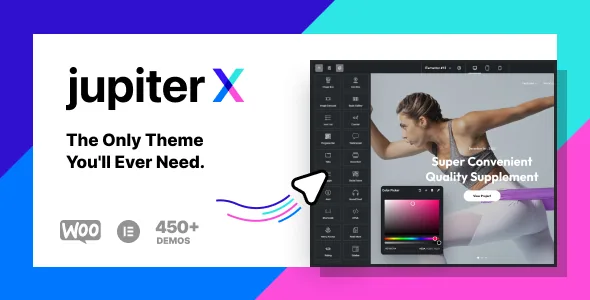
JupiterX's defining bet is consolidation. Artbees describes the theme as less dependent on third-party tools, and the v4 feature list opens with native versions of a Theme Builder, Theme Styles and Custom Code, followed by "native replacement to nearly all essential Elementor Pro widgets." On the page builder side it still runs on Elementor; the theme is listed as compatible with both Elementor and Elementor Pro.
What the native builders cover
Beyond the page canvas, Artbees lists a Layout Builder with advanced conditional display, a Mega Menu builder, a Popup Builder, a Role Manager, global widgets, custom fonts and custom icons. Conditional display is the detail worth noticing: it is what lets a header or template apply only to a defined group of pages, products or user roles rather than sitewide.
Motion Effects and Lottie animations are also native, along with a custom code area for scripts and styles. The vendor describes the code as built on open-source libraries including Beans, Bootstrap and ACF, with actions and filters exposed for developers. None of this has been tested here; it describes what the marketplace documentation offers.
Shop tooling that goes past page design
Artbees describes a set of tools for the purchase journey. JupiterX's commerce list reaches into store operations: an advanced checkout builder with express checkout, auto-complete, repopulate and in-line validation; a personalised one-click order bump; one-click upsell and downsell; dynamic discounts at checkout; smart coupons; smart checkout notices; and advanced shop analytics.
Template coverage across shop and content
The vendor's overview lists custom shop pages for product, categories, tags, authors, checkout, cart, thank-you, my account, login and child pages, plus custom archives for posts, products, portfolios, search results, categories and tags. Custom single templates extend to portfolio, post, category, author, tag, 404, media and stepped pages.
The blog and portfolio customisers work the same way, and the description notes you can switch off blog elements such as social icons, comments and meta information on single posts. Sections can be saved and reused, and a section navigator handles larger pages. If your project includes a magazine, a portfolio and a store in one site, this coverage is the practical argument for the theme. If you only need a marketing page, most of it goes unused.