A black-and-white theme, with one documented exception
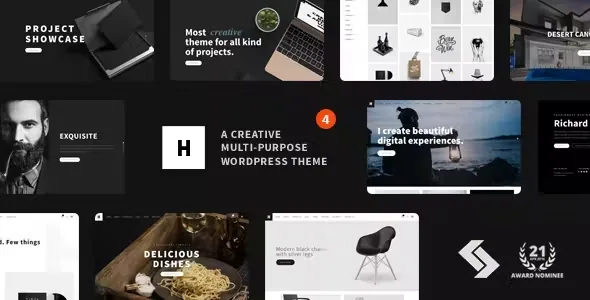
ThemeMove calls Heli "a black and white dedicated WordPress theme." The restriction is framed as the premise, not as one palette among many, which is why it belongs at the front of any decision about the theme.
The vendor's demo notes show how far that premise stretches. The Travel demo is described as staying loyal to the black-and-white scheme while adding "some nuances of blue color: the sky and the sea." A separate feature-list line advertises unlimited colours. Read together, those lines describe a restrained starting posture you can bend, not a locked palette — but the bend is the exception, and the monochrome register is what the demos are built around.
The practical effect lands on photography. Removing competing hues makes a portfolio of mixed work read as one coherent set, and it pushes typography and whitespace forward instead of letting decoration carry the page. A store where accurate colour is part of the sale, or a campaign built on a single loud hue, would spend the build arguing with the theme's stated direction.
The demo library is organised by sector, not by layout
Three different homepage counts appear in the vendor's description: 36+, 40+ and 22+ in the feature list. No two agree, so none of them is a specification. What stays consistent is the organising logic — starting points grouped by industry, with the vendor naming Business, Finance, Architecture, Technology, Industry, Fashion and Restaurant, then adding Travel and Fitness in a newer batch.
That structure is the useful part. A fashion homepage and a finance homepage arrange proof, imagery and calls to action differently, so picking the closest sector demo gives you the right rhythm before you touch a single element. One-click demo installation is listed among the features, which confirms the intended entry point: import, then edit down. Demo images are demonstration content and should be replaced with your own.
Where styling happens, and where page bodies get built
The first item in the vendor's feature list is a selective reloading feature, and it belongs to the Live Customizer the description promotes. Change a setting, and the preview refreshes only the affected part; you save once the result looks right. On a content-heavy site that is the difference between adjusting typography live and reloading a full page for every tweak.
Page bodies sit on a different surface. WPBakery Page Builder is where layouts are assembled, with Slider Revolution handling sliders, Essential Grid handling grid-based galleries and listings, and Templatera for saving and reusing WPBakery templates. Templatera matters most if the same section pattern recurs across many pages — save it once and drop it in, rather than rebuilding the block each time.
The marketplace attribute for Gutenberg Optimized reads Yes, but the vendor's own description of the editing surface is WPBakery plus the Customizer. If your team works in the block editor, confirm on a staging install how much styling block-built pages actually inherit.
The layout counts that decide whether your content fits
Beyond the demo homepages, the vendor lists counts for the parts that repeat on every page: 4 navigation menu arrangements covering horizontal and vertical headers, 4+ mega menus, 5 footer layouts, 6 page title styles and a flyout sidebar.
The portfolio numbers are the ones worth mapping against your own material: 5+ project detail layouts and 12+ project options. Those decide whether a case study can run a full-bleed image sequence, a two-column write-up or a mixed grid. Blog content gets 3+ options, and shop layouts are described as supporting full-width and sidebar arrangements.
Test the project layouts against the hardest content you have — a case study with an awkward image ratio or a long written section is a better check than a demo's cleanest example.
Bundled plugins, activation prompts and update timing
The vendor bundles four premium plugins and quotes what it says they would cost separately: WPBakery Page Builder ($64), Slider Revolution ($29), Essential Grid ($34) and Templatera ($13). Those are the vendor's comparison figures, not a price for Heli.
ThemeMove's note is direct: bundled plugins can be used without a licence, and a message asking for a purchase code for registration or activation can be ignored. The stated consequence is that licences cannot be redistributed, so plugin updates arrive with theme releases rather than directly from each plugin's author. If you need a specific plugin fix ahead of that rhythm, the vendor's own suggestion is to hold your own licence for that plugin.
Worth building into a maintenance plan either way — a bundled builder and slider move on the theme's schedule, not the plugin authors'. The ThemeForest files are listed as PHP, CSS and JavaScript, with the theme marked widget-ready and high-resolution assets included.
Declared compatibility, and one contradiction to resolve
The marketplace attributes provide two different statements about Bootstrap. The compatibility field declares Bootstrap 4.x, while the vendor's own feature list says the theme is "Bootstrap 3.X Based." Neither is a runtime result, and the gap matters if you plan custom front-end work on top of the theme's markup. Check the rendered source on staging rather than picking a side from the listing.
The compatibility field, as observed on 4 November 2026, declares WordPress 5.2.x through 7.0.x, WooCommerce 5.x.x through 10.x.x, WPML and WPBakery Page Builder, with Firefox, Safari, Opera, Chrome and Edge named as browsers. Those are vendor declarations recorded at a moment in time, not evidence that Heli runs cleanly on your PHP version, hosting stack or plugin set.
WooCommerce support at that range makes a shop viable on Heli, though the theme's design premise still governs how it looks: products inherit a monochrome treatment, and catalogue imagery carries the colour decision for you.
Questions & answers
Is Heli suitable for a site that depends on strong brand colours?
The vendor positions Heli as a dedicated black-and-white theme, and its demos stay in that register, with the Travel demo adding blue tones for sky and sea. The feature list also mentions unlimited colours, so changes are possible. A project whose identity rests on a bold colour would still be building against the theme's premise rather than with it.
How many homepage demos does Heli include?
The vendor material gives 36+, 40+ and 22+ in different places, so the exact figure is unclear. What is consistent is the grouping by sector — business, finance, architecture, technology, industry, fashion, restaurant, travel and fitness among them — all intended as imported starting points you edit down.
What does selective reloading change about styling a site?
It refreshes only the affected part of the Customizer preview when you change a setting, instead of reloading the whole page. It is the first entry in the vendor's feature list and supports the Live Customizer workflow of adjusting styling live and saving once satisfied.
Which Bootstrap version does the theme use?
The record is inconsistent: the marketplace compatibility field declares Bootstrap 4.x, while the vendor's feature list says the theme is Bootstrap 3.X based. Confirm against the theme's actual markup on a staging install if you plan custom front-end work.