A settings layer that carries values down the site
The vendor's own summary of Frank leads with something other than the layout: a "unique system of inheritance and override options" that sets individual parameters for different sections of the site and for supported plugins. The feature list names it again inside the theme framework as the Setting Inheritance and Override System.
Read plainly, one value is defined at the framework level and passes down to everything it governs, while an override at a narrower level wins for that section alone. An accessories catalogue is a reasonable place for that arrangement, because the sections genuinely diverge: a dark opening banner, a pale product grid, a footer band with its own spacing. You set the default once and treat the exceptions as exceptions instead of retyping typography and color values page by page.
This is a vendor description of the framework, not a documented testing workflow. Whether it earns its keep depends on how much section-level variation your design actually has. A shop where every page should match gets nothing from a second settings layer.
The 750+ Customizer options sit under that override layer
The feature list pairs the framework with 750+ Customizer options, a separate theme options panel, custom post types, widget sets and shortcodes. Those belong to the site-wide side of the work. Elementor owns page content and, per the vendor, the header and footer layouts too.
The practical consequence is a two-part rebrand. Changing an accent color everywhere is a Customizer task; changing one hero is an Elementor task; and the override layer decides which value applies where they collide. Scope the job with that split in mind, since a client brief that mixes global and page-specific changes will touch more than one screen.
Elementor and ThemeREX Addons are both listed as required plugins, and much of the hands-on capability lives in the second one rather than in the theme shell.
The add-on widgets do the shop-floor work
ThemeREX Addons is where the catalog-specific controls appear, and the vendor's release notes show what that means in practice. A Layouts Cart widget gained an option to hide a zero counter, so an empty cart icon stops advertising "0" beside the header menu. A WooCommerce Product Filter gained a search field for long lists of 15 or more items and scrollable attribute lists in the sidebar.
That second change is the one worth weighing if you sell rings, watches or stones with many variations. Long metal, size and stone lists are exactly where a sidebar filter becomes unusable, and scrollable attribute lists are the kind of fix that only shows up when someone has run a real catalogue through it. The same release tuned attribute auto-detection so attributes marked with "Use as filter" disabled are skipped, and sorted attribute names.
Elsewhere the notes mention an Elementor Templates icon and notice for templates that depend on third-party plugins. Small, but a fair hint that a demo arrangement may rely on plugins beyond the theme itself.
Touch navigation fixes matter for a shop with phone traffic
The vendor's bug-fix list for its most recent release is unusually concentrated on mobile behavior, which is the part of a storefront that quietly costs sales. On iOS, a submenu no longer closes right after you tap its parent item, and submenus gained left-shift support. A local link written in full url#hash form no longer jumps the page back to the top when chosen from the mobile menu.
Two WooCommerce items in the same list are narrower but relevant: searching from a single product page now opens the shop page instead of returning product-page results, and custom product tabs got a priority adjustment so they coexist with Elementor Pro tabs. None of this is a claim about how the theme behaves on your hosting or plugin stack, only a record that these specific behaviors were addressed.
Eight homepages, two shop styles, and no photography
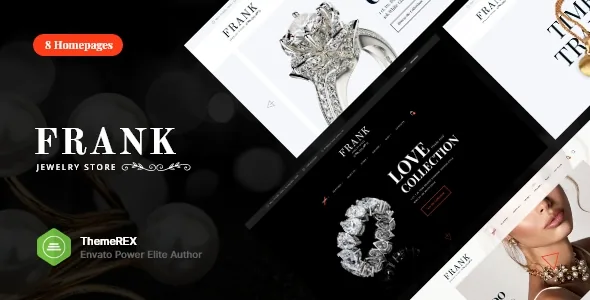
The vendor counts 8 unique homepages made with Elementor, 2 ultra-modern shop styles, galleries management and a prepared blog. Treat the eight as a starting set: you choose the arrangement closest to your catalogue and edit from it. The demos lean on large imagery, which is a decision about your assets rather than the theme.
The vendor states it plainly: images used in the live preview are not included and remain with their owners, with stock credited to depositphotos, peopleimages and flaticon. Google Fonts is the named font source. Every product shot, model photo and banner has to be licensed and shot or bought separately, and the ThemeForest file list covers PHP, CSS and JS files only.
Declared plugin compatibility, presented as a supported set rather than dependencies, includes WooCommerce, WPML, TI WooCommerce Wishlist, YITH WooCommerce Gift Cards, Smash Balloon Instagram Feed, elegro Crypto Payment, Contact Form 7, MC4WP, Slider Revolution, Advanced Popups, Image Hotspot and WP GDPR Compliance. A listed integration does not mean every demo uses it or that it is required for a basic build.
Multilingual, block editor and what the declarations cover
WPML appears in both the compatibility list and the description, where it is tied to a language switcher for moving between translated versions of the site. That is a declared path, not a finished multilingual shop: product copy, attributes, size guides and checkout strings still need translating.
The marketplace marks Gutenberg Optimized as Yes, and the recent changelog records block-editor work on font and icon loading plus rewritten style context, along with an option for how styles enter the editor. Both statements can hold: the theme has been adjusted for the block editor while Elementor remains the intended page-building route.
Marketplace compatibility attributes observed on 4 November 2026 list Elementor, Elementor Pro, WooCommerce 6.x.x and 5.x.x, and WPML, with a WordPress range spanning 4.9.x to 7.0.x and browsers named as Firefox, Safari, Chrome, Opera, Edge and IE11. Take that range as a declared support window. It says nothing about your PHP build, caching layer or the plugins you add.
One discrepancy is worth knowing rather than puzzling over: the marketplace listing's latest version number and the version at the top of the vendor changelog do not agree. Check the live listing if an exact release number matters to you.
Why the add-on matters for upkeep
A theme with a required companion plugin inherits that plugin's exposure, and the vendor's recent notes list real security fixes inside ThemeREX Addons: a potential server-side request forgery path through SVG images loaded by URL and through the AI Helper upload route, stored cross-site scripting in Elementor background text, presets and the Instagram widget, PHP object injection in the settings decoder, and unsafe attributes in HTML tag parameters and macro processing. An earlier release fixed object injection during skin installation.
If you run this theme, the add-on's update trail is part of your maintenance routine, not an optional extra. The same release also rewrote CSS and JS minification, forced hyphenation off on mobile, swapped deprecated clip rules for clip-path, and added admin style fixes for WordPress 7.0 and later.
Questions & answers
Do I need Elementor Pro to build Frank's pages?
The vendor marks Elementor and ThemeREX Addons as required and lists Elementor Pro among compatible plugins rather than dependencies. Some documented add-on features reference Pro parts, such as custom-cart selectors in the Cart Widget, so Pro adds capability without being declared mandatory.
Is the settings override layer the same as Elementor's global styles?
They are separate surfaces. The vendor describes inheritance and override as part of the theme framework, covering site sections and supported plugins, while Elementor holds page content and the header and footer layouts. Where both apply to a section, the override level determines which value wins.
Are the demo images and fonts included?
No. The vendor says preview images are not included and stay with their owners, and names Google Fonts as the font source. Budget for licensed product and lifestyle photography before you start a jewelry or watch catalogue.