Who builds the product page: the theme or Elementor Pro
DiCi's own description makes a distinction many shop themes leave vague. The theme comes with its own product page templates, and the vendor says you can use Elementor Pro instead if you want the plugin's custom product pages rather than the theme's.
That is the first decision to make, because it changes where your catalogue design lives. Staying with the theme's templates keeps the product layout in the theme's files, and photo styling, price placement and any add-to-cart arrangement follow what the theme provides. Going the Elementor Pro route puts that same layout into the builder, where you edit it with widgets and dynamic WooCommerce fields and keep it independent of theme template files.
The rest of the site is unaffected either way — pages, and the header and footer described below, are Elementor from the start. So the question is only whether the product page joins them or stays in theme territory.
The header and footer are Elementor layouts, not theme options
The vendor states that the header and footer are already editable with Elementor. On a jewelry shop that means the pieces visitors use constantly — navigation into rings, watches and collections, the cart link, a search field, a footer with care information and contact details — are built and adjusted in the same interface as the rest of the pages.
The practical difference shows up over time. Adding a second navigation row for a seasonal collection, or reordering the footer, is a builder edit rather than a hunt through the theme's option panels for the setting that controls that band. The trade-off is the usual one with builder-driven chrome: header and footer markup comes from your Elementor layouts, so a redesign means editing those layouts, and anything you change lives outside the parent theme.
The feature list also names great mega menus, which is where a larger catalogue with nested categories will spend most of its navigation effort.
Five demo sets and a deliberately quiet palette
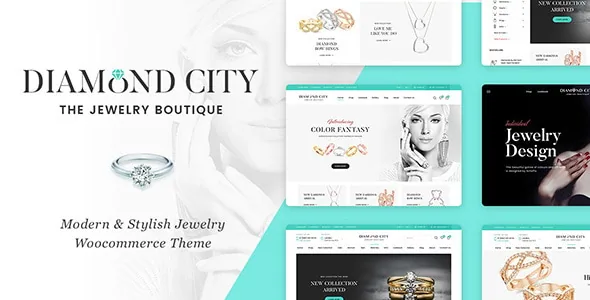
DiCi ships with five demo data sets that the vendor describes as easy to install and adjust. No subject breakdown is given for the five, so treat the count as a number of starting compositions rather than a menu of finished shops — the live demo is the place to see which ones lean toward jewelry and which toward the broader purposes the theme also claims.
The visual direction is stated plainly: a gentle color palette, retina-ready assets and Font Awesome icons, alongside unlimited colors and advanced typography options. Read together, that describes a design starting from restraint — light backgrounds, soft tones, small icon detail — with the settings to move away from it. The marketplace tags observed on 4 November 2026 include white alongside jewelry and luxury items, which fits that restrained reading.
The framing is not exclusive to jewelry. The theme's own metadata calls it a minimal multipurpose theme and suggests wedding, fashion or personal blog uses; the seller's page also mentions watches and craftsmen. If you are building a jewelry storefront, you are using a general frame that has been styled for one, not a theme locked to a single trade.
What the shop still needs beyond the theme
WooCommerce provides the commerce layer: products, variations, cart, checkout and the payment gateways you connect through WooCommerce extensions. DiCi's job is the presentation around that — nothing in the seller's description suggests the theme replaces or extends WooCommerce's selling mechanics.
Revolution Slider appears in the feature list as included for free. That is the seller's bundle claim, and it is worth checking what your own copy activates before you plan a homepage around a slider, since bundled plugins can differ by version and licensing.
The description also names custom Elementor widgets as part of the package. Those are described as time-savers, without a count or a list, so if your layout depends on a particular widget type — a product carousel, say, or a filterable category grid — confirm it in the demo before committing. Beyond that, jewellery-specific conveniences such as wishlists, size guides or appointments are not mentioned as theme features, and should be planned as separate plugins or built as Elementor sections.
What the marketplace listing declares
Observed on 4 November 2026, the listing marks DiCi compatible with Elementor and Elementor Pro and lists WordPress 5.0.x through 6.0.x. It also marks the theme Gutenberg optimized, widget ready, high resolution and responsive, with a two-column layout attribute and support for Firefox, Safari, Opera, Chrome and Edge.
Those are declarations attached to the product, not records of testing against a current WordPress release. The version range is the clearest example: the theme was last updated in July 2025 per the vendor record, and the WordPress versions named stop at the 6.0 line, so a site running a much later WordPress release is working outside what the listing states.
The ThemeForest file bundle is listed as PHP, CSS, Sass, SCSS and JavaScript files. That Sass and SCSS presence matters if you intend to change styling at the source rather than through the theme options and Elementor settings.
The listing also records 1,665 sales and a 4.69 rating across 61 ratings — marketplace history at a point in time rather than a quality guarantee for your particular use.
Where this workflow lands
DiCi suits a small to mid-sized jewellery or watches catalogue where one person or a small team handles both design and content. The header, footer and every static page are Elementor, so the editing surface is consistent; the product page is either the theme's own template or an Elementor Pro layout, and choosing between them is the decision that shapes the rest.
If you already rely on Elementor Pro and want catalogue pages you control element by element, the vendor has described that path. If you would rather keep product pages in the theme and spend your builder time on landing pages and campaign sections, DiCi supports that too — just expect product page edits to be a theme-code matter rather than a drag-and-drop one.
Questions & answers
Does DiCi require Elementor Pro for its product pages?
No. The theme comes with its own product page templates, according to the vendor. Elementor Pro is described as an alternative for people who want the plugin's custom product pages instead. The header, footer and static pages are built with Elementor itself, which the listing marks as compatible.
Can I use DiCi for a site that is not a jewelry shop?
The theme's own metadata describes it as a minimal multipurpose theme suited to wedding, fashion or personal blog sites, and the seller's page also mentions watches. The jewelry framing is a styling direction with five demo sets behind it, not a restriction on what the theme can display.
How many slider or widget options come with the theme?
The seller lists Revolution Slider as included for free and mentions custom Elementor widgets without naming a count. Treat both as vendor statements about the bundle and confirm the specific widgets your layout depends on in the live demo.