A farm theme whose declared WordPress range reaches back to 4.9.x
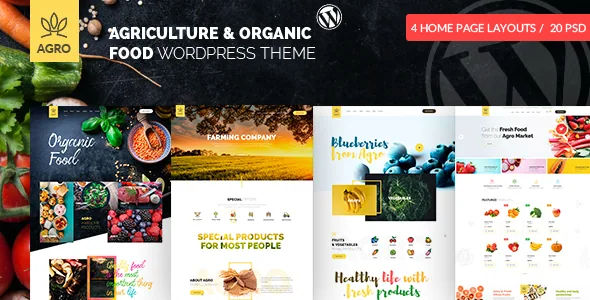
Agro's listing declares support for WordPress 4.9.x through 7.0.x. Widening a compatibility list that far usually means a theme that has been maintained across several WordPress generations rather than rebuilt around a modern editor, and the rest of the listing backs that up: the editing layer is WPBakery, the settings layer is a theme options framework, and the block editor is not what the vendor is selling you.
That matters for how you judge the theme. A grower's site, a farm shop or a landscaping business does not need a cutting-edge editing model, but it does need to know where pages are assembled and what happens when WordPress moves on. The range is a declaration from the vendor and marketplace listing, not a record of testing on your server.
Pages are assembled from shortcodes, not blocks
The vendor describes the WPBakery page builder as the way pages are built, with more than 40 shortcodes available across pages, posts and custom post types, plus a grid control system for aligning columns. The feature list names the sort of elements a sector site leans on: video background, parallax image, onepage scroll and progress bars. The listing's columns attribute is 3, which describes the grid the theme is built around rather than a limit on layouts you can create.
Practical consequence: layout lives in shortcode markup inside the builder. If you later decide to move to the block editor, the content does not travel as blocks. If your team already builds in WPBakery, this is ordinary work.
Theme options and metaboxes do the settings work
Global settings run through a control panel the vendor describes as built with Redux or Option Tree, covering preloader, back-to-top control, logo, menu, colours, footer, the layout of inner pages and sidebars, and the structure of 404, search and archive pages. Typography is set there too, with Google Web Fonts selectable for body text and headings.
Per-page overrides come from bundled metaboxes. The vendor names custom menus per page, page-level background images and CSS applied to the header and footer areas so colours, spacing and height can be adjusted for a single page. That split is the thing to plan around: site-wide look in the options panel, page-specific exceptions in metaboxes.
The shop layer and the plugins the listing names
WooCommerce compatibility is declared across versions 5.x through 9.x. The vendor frames the theme as a route to selling products online, and the marketplace attributes also list Contact Form 7, WPForms and Gravity Forms for forms, WPML, Events Calendar, Easy Digital Downloads, Jetpack, bbPress and BuddyPress, plus Bootstrap 4.x and 5.x.
Read a compatibility list as declared scope, not as proof every combination works together. A farm shop running WooCommerce 9.x with a forms plugin is a plausible mix; testing that mix on a staging copy before launch is still your job, because none of these entries describe what was actually tested.
Three homepage layouts and the onepage-versus-multipage choice
The feature list counts three home page layouts and says both onepage and multipage structures are supported. A one-click demo installer and XML file come with the theme so a demo can be imported and edited rather than built from an empty install.
The more consequential decision is structural. A onepage layout concentrates everything a visitor needs — the farm story, produce, contact — into scrollable sections, which suits a single-produce operation or a farm that mostly wants enquiries. A multipage structure gives a shop, a blog and service pages their own addresses, which suits a site that will keep growing. The theme supports both, so the choice is yours to make rather than the theme's.
Translation, right-to-left display and the .POT file
The vendor states that RTL language support was added and that a .POT file sits in the theme's language folder for translating the theme's own strings with a tool such as POEDIT. WPML appears in the compatibility list.
For an organic producer selling into more than one language market, RTL support is a real difference — Arabic or Hebrew storefronts need direction handling that is not a CSS patch you want to write yourself. What the listing does not say is whether every demo layout flips cleanly, so check the demo in a right-to-left context if that is your plan.
PSD sources in the package, and the Gutenberg label
The file list includes PHP, CSS and JS files alongside PSDs, and the feature list specifies 15 customizable PSD files with fully layered sources. That is worth noting for a sector where a grower may want banners, produce cards or seasonal campaign graphics matched to the site's look: editable source saves rebuilding them from scratch.
The listing marks Gutenberg Optimized as No. That records the vendor's positioning around WPBakery, not a statement that the block editor is switched off. Posts written in blocks still pick up the theme's typography and container widths.
Questions & answers
Does Agro work without WPBakery?
The vendor describes the theme's page building as WPBakery shortcode work, and the metaboxes and theme options are separate from it. The listing does not state that WPBakery is technically required for the theme to run, so if you intend to edit pages in the block editor instead, confirm that with the vendor before you buy.
Can I sell produce and farm products with Agro?
WooCommerce compatibility is declared from version 5.x through 9.x, and the vendor presents online product sales as one of the theme's uses. Treat that as declared support and test your actual product types, shipping setup and payment plugins on a staging site.
Is the theme translated already?
The theme ships a .POT file for its own strings, which you translate with a tool such as POEDIT, and the vendor states that RTL language support was added. WPML is listed as compatible. Ready-made translations for specific languages are not mentioned in the supplied listing.
What design files are included?
The marketplace file list names PHP, CSS and JS files plus PSDs, with 15 customizable PSD files described in the feature list. Demo-site photography is a separate matter from the layered design sources, so plan to supply your own imagery.