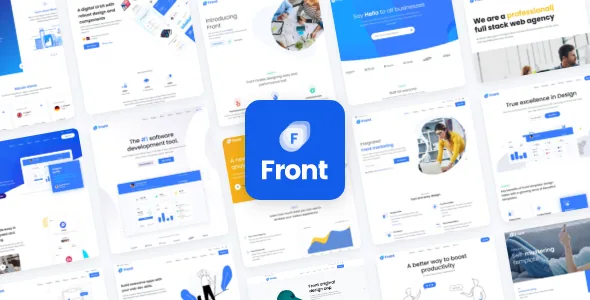
A multipurpose theme that skips the page builder
Most themes selling breadth do it by shipping a builder and a pile of templates. Front takes the other route. MadrasThemes states in the description that every element of the demo homepages is built in WordPress's native editor, and that bulky page builders are not needed. The marketplace listing agrees on the point that matters — it marks the theme Gutenberg Optimized: Yes — though that attribute is a compatibility declaration, not proof of how the demos were assembled.
That decision shapes everything downstream. Editing a page means editing blocks in the core editor, so anyone who already knows WordPress block editing needs no new canvas to learn, and content stays in post content rather than in builder shortcodes or serialized meta. The trade-off is the reverse of the builder promise: you inherit the block editor's strengths and its limits, and the theme cannot give you a drag-and-drop interface beyond what core blocks and the theme's own block library provide.
The vendor attributes a speed claim to this choice, saying the theme loads under 0.7 seconds and mentioning WP Rocket as an additional optimisation plugin for sub-700ms times. Treat that as a vendor claim tested on the vendor's setup; it is not a measurement of your site. It is, however, consistent with the underlying argument, since a page built from blocks avoids loading a separate builder framework.
What 150+ blocks and the template-chrome counts give you
The feature list separates two kinds of reusable material. On the content side, 150+ Gutenberg blocks are described as supplied with the theme, with separate online documentation for them. On the chrome side, the vendor counts 30+ hero layouts, 90+ header and navbar layouts and 10+ footer layouts.
The header and footer counts are the practical part for a theme pitched at many business types. A corporate site, a crypto landing page and a job board need genuinely different navigation, and the vendor's claim is that you pick an arrangement rather than build one. Whether those layouts are separate templates or variations of a few patterns is not something the description spells out, so judge that from the live demo.
Blocks are the piece to think about before committing. A block library shipped inside a theme belongs to the theme: the block markup is registered by theme code, so the patterns you build depend on that codebase staying in place. That is a normal arrangement and not a defect, but it is the opposite of the portability you get from builder-agnostic content, and it is the main reason to be deliberate about how many of the custom blocks a long-lived site relies on. The framework details fit here too: the theme is described as built on Underscores with Bootstrap 4, Gulp and SASS, and the listing declares Bootstrap 4.x compatibility alongside WooCommerce 9.x.x and 10.x.x.
Two verticals that lean on plugins, not layouts
Among the business types the demos cover — corporates, agencies, products, apps, real estate, crypto — two stand out because the theme's description ties them to named plugins rather than to template design alone.
The job board demo is built around WP Job Manager. MadrasThemes says Front integrates with the plugin and its core add-ons and that the theme adds extra blocks to extend it. Read carefully: the block library improves how listings and job pages look, but the listings themselves are the plugin's data. A separate vendor note is more important for budgeting. Demo pages such as Candidates are generated by a Core Add-On plugin described as a premium plugin bundle that is not included with the theme. If a candidate directory is central to your plan, price that add-on in before you start.
The help desk demo works the same way with weDocs, an industry-standard knowledge base plugin. The vendor states that help desk content is part of the one-click demo import, so importing the demo gives you a populated knowledge base structure to rewrite rather than an empty shell. Documentation content is yours to write either way; the theme supplies the presentation.
Importing the demo: fast route or full route
The vendor describes two import modes for the main demo, and the difference is measured in minutes. The full version pulls in 300+ images and the vendor estimates 20+ minutes for the download, depending on connection speed. The placeholder version includes the same demo without the stock photography and imports in under a minute.
The placeholder route is the better first move when you are evaluating layout rather than photography: you see the structure immediately, then fill in your own images as pages get built. The full route suits someone who wants to see the demos exactly as previewed before replacing assets.
On the images themselves, MadrasThemes says the stock photos in the live demo are included with the purchase under a custom license. That is the vendor's statement about the marketplace product. Your own photography decisions still apply to a live site, and the visual weight of these demos is high enough that replacing images with weak ones will change the feel more than the layout will.
WooCommerce and the store pages
The shop side is described as a styling job rather than a custom commerce system. Front is declared compatible with WooCommerce, and the vendor points to crafted shop and product archive pages. That means the buying mechanics, cart, checkout and account pages all run on WooCommerce itself, with the theme providing the layout around them. If you sell physical products or digital ones through WooCommerce, the theme slots in; if your model needs subscriptions, memberships or complex pricing, those come from additional extensions and are not described here.
The listing declarations observed on 4 November 2026 name WooCommerce 10.x.x and 9.x.x and WordPress 7.0.x and 6.9.x. The marketplace version recorded at that time is 1.2.5, and the vendor's last update timestamp on the listing is 10 September 2026. These are declarations attached to the product, not results of an install test; plugin versions in an archive can also lag the standalone releases, so confirm what you are running once it is set up.
Questions & answers
Does the job board demo work without extra paid plugins?
Partly. The listings run on WP Job Manager, which the theme is described as integrating with and extending through its own blocks. But the vendor states that demo pages such as Candidates are generated by a premium Core Add-On plugin bundle that is not included with the theme. Check that add-on's cost if candidate profiles matter to your site.
Do I have to use the block editor with Front?
The theme is built for it. The vendor says the demo homepages are assembled from native WordPress blocks and that no page builder is required, and the marketplace marks the theme as Gutenberg optimized. That is a statement about where the vendor's design work sits, not a restriction on how you edit your own content.
How long does the demo import take?
Two options are described. The full main demo includes 300+ images and the vendor estimates 20+ minutes for the image download, depending on your connection. The placeholder version drops the stock photography and is described as importing in under a minute — useful when you only want to inspect the layout.