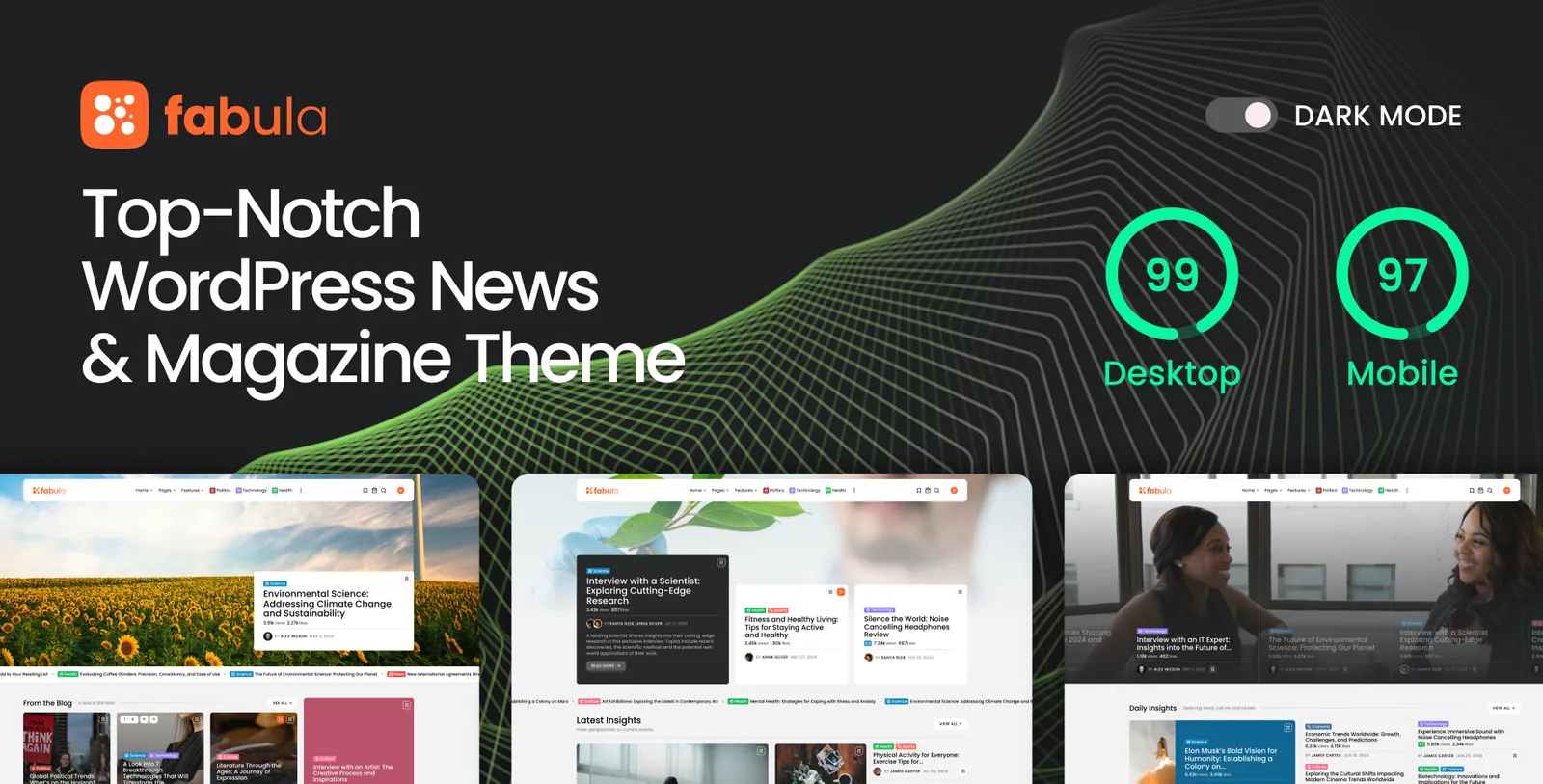
Fabula combines post-based reviews and editorial controls with reader bookmarks and configurable magazine listings.
Updated November 5, 2026 · theme.markets editorial team
Editorial controls built into individual posts
KnightleyStudio’s marketplace description presents Fabula as a magazine theme with post-level options for disclaimers, featured-post labels, 18+ warnings, password protection, sticky author bios, and related posts grouped by category. These controls let editors add context or restrict access on a post, alongside a review system based on WordPress posts with customizable criteria, pros, cons, and ratings.
Reader actions and ways to browse
The description also lists post views, likes, and personal bookmarks, allowing readers to save posts for later. For navigating listings, Fabula offers numeric pagination, a load-more button, or infinite scrolling; the vendor describes all three as AJAX-powered.
A broad range of magazine listing styles
Fabula is described as including more than 28 Elementor widgets for blog content, such as post grids and sliders, category listings, tag clouds, and social lists. The marketplace description also lists 35 configurable listing styles across grids, lists, sliders, and featured posts. These give you several ways to arrange magazine content; the claims are vendor-described, not results of installation or runtime testing.
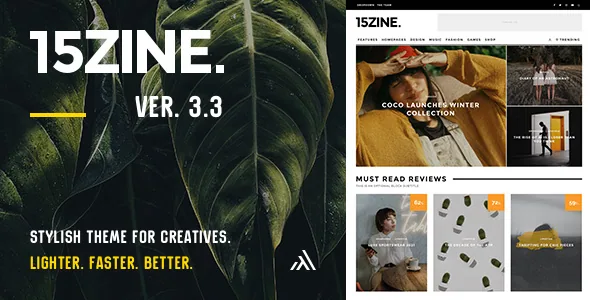
15Zine, by Codetipi, treats scored reviews as first-class content rather than a star field bolted onto a blog layout: three score formats, unlimited criteria, unlimited pros and cons, and a setting for editor-only, reader-only or combined voting. The article follows that review object through single posts, the fixed grid and slider vocabulary used to assemble front pages and categories, the Jetpack stats dependency behind trending menus and view counts, and the styled shop and forum surfaces.
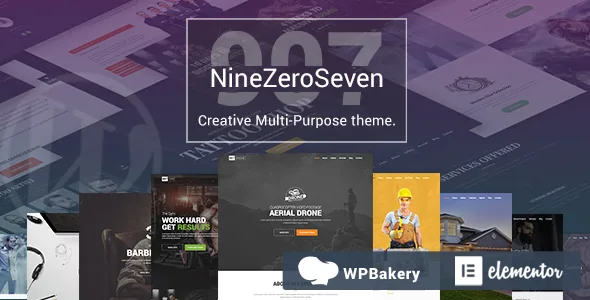
907, by webcreations907, is built so that individual pages can carry their own logo, colours, fonts and menu, with CSS page loaders switched on or off per page. The article covers that per-page model, the WPBakery-plus-Revolution-Slider package against Elementor as a compatibility entry, repeatable portfolio and blog loops with AJAX pagination, filterable portfolios with mouseover video, the 27 demos and 134 theme blocks, and what the changelog shows about maintenance.
Airtifact is a portfolio theme whose browsing layer runs on AJAX, with a one-click switch to turn that behaviour off, two navigation treatments, and a deliberately small in-house content builder rather than a mainstream page builder. Its project grids use Packery, Isotope or masonry with item filtering, and the vendor notes a limitation worth knowing before you plan a blog: only one of its two blog styles can be active at a time.